Wine Countrypoured: RieslingGermany (Rhineland-Palatinate)
Riesling on the Slate: Along the Mosel
From Trier to Koblenz, the Mosel gathers Roman stone, slate vineyards and riverside towns around Riesling, its leading grape.
In 2007, the region’s official name shortened to Mosel. The river itself keeps its winding course from Trier to Koblenz. Names change; the river carries on.
| River | Mosel |
|---|---|
| Rises | Vosges mountains, France |
| Joins | Rhine at Koblenz |
| Leading grape | Riesling |
The river
The Mosel rises in the Vosges mountains in France, then joins the Rhine at Koblenz. Between Trier and Koblenz, water and vineyard slopes give the journey its shape. Its story gathers through wine, stone and towns beside the river.
At Trier, the upper Mosel meets a Roman past. Trier was a major Roman city, and the Porta Nigra gate still stands. Its dark presence gives the city’s history a physical edge.
The Neumagen wine ship offers another image in stone. It is a Roman carving of a boat loaded with wine barrels. Kept in Trier’s Rheinisches Landesmuseum, it brings wine into the region’s older story.
That small boat seems to carry more than barrels. It joins the pleasures of wine with the record of Roman life. The river does not need to choose between them.
Slate and wine
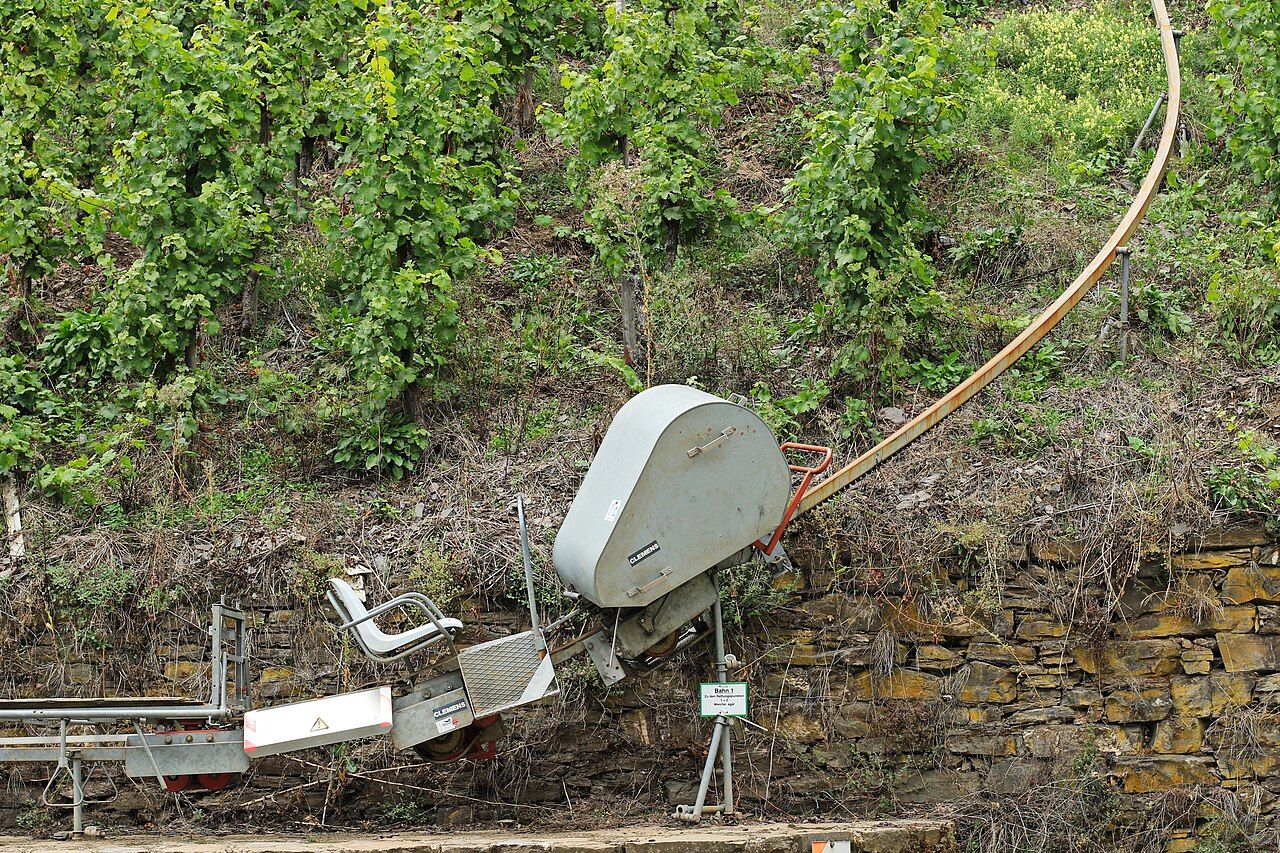
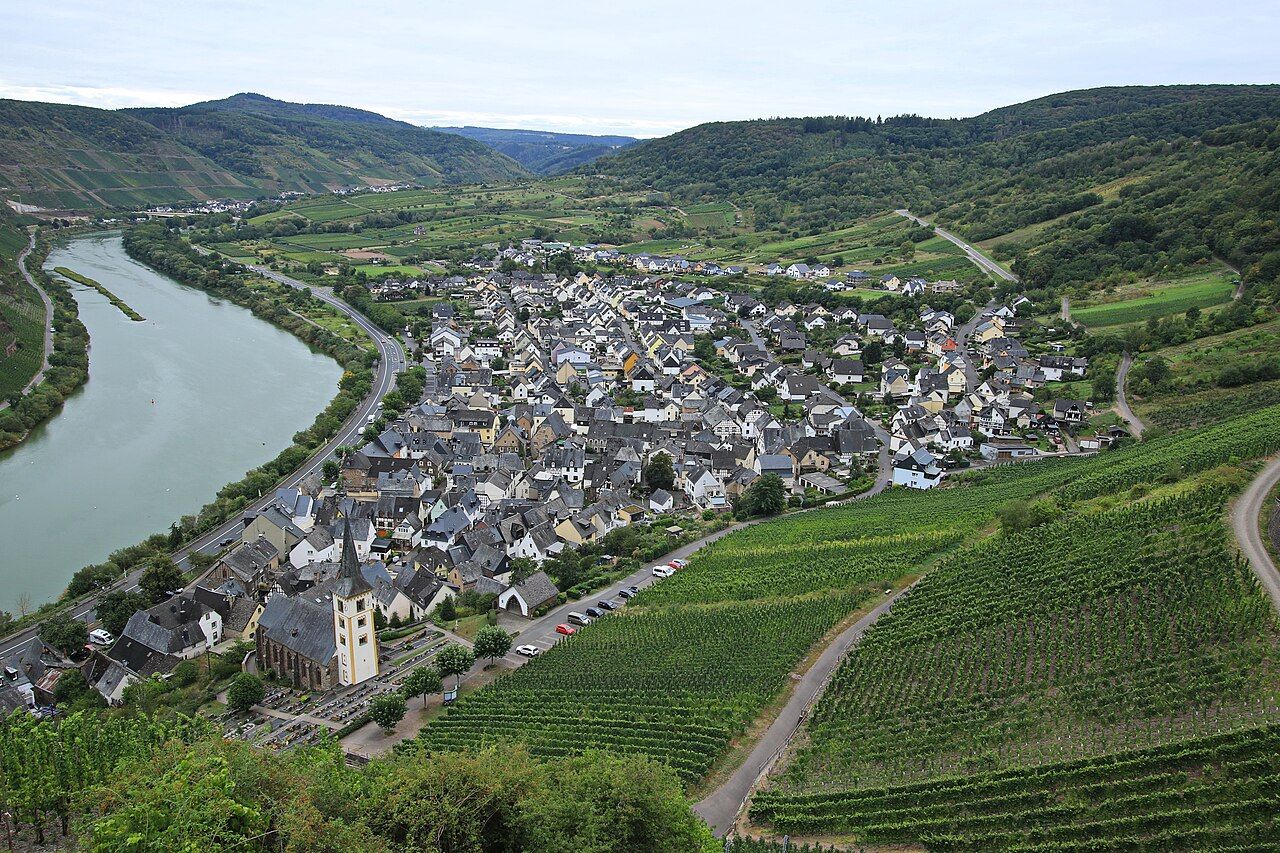
Blue and grey slate underpins many Mosel vineyards. On steep slopes, the stone holds warmth. The vineyards rise sharply, and the slate gives the hillsides their own quiet colour.
The Bremmer Calmont is often described as Europe’s steepest vineyard slope. Even the description feels close to the land. Here, steepness is not scenery at a distance; it is part of the vineyard itself.
Riesling is the Mosel wine region’s leading grape. It gives the journey a steady thread, while slate and slope provide the setting. The river’s name, too, has become the region’s shorter name.
German Prädikat levels include Kabinett, Spätlese and Auslese. They describe the ripeness of the grapes at harvest. The words can sound like a small procession, each marking a different degree of ripeness.
Eiswein follows a colder course. Its grapes are left to freeze on the vine, then picked in winter. The harvest rests on a sharp contrast: fruit held back, then gathered in winter.
Riesling sets the table here; Cologne's slim-glass beer belongs to another glass-shaped story. The comparison is a reminder that a drink can carry a place in its name, its shape or its hillside.
Along the banks
Traben-Trarbach, Bernkastel-Kues and Cochem line the Mosel. Their names give the river journey a human scale. The route is not only a sweep of water and vineyard; it is also a string of towns.
Bernkastel-Kues carries a history of its own. It was the birthplace of the fifteenth-century philosopher Nicholas of Cusa. A town beside the river can hold more than one kind of inheritance.
The Mosel once had a longer official name: Mosel-Saar-Ruwer. In 2007, it became Mosel. The shortened name leaves the river’s course intact, but gives the region a spare new label.
From Trier’s standing Roman gate to slate holding warmth on steep slopes, the journey keeps changing its scale. A carved boat, a grape and a riverside town each offer another way to read the same river.
At Koblenz, the Mosel joins the Rhine. The water reaches its meeting place carrying Roman memory, wine and the names of towns. What else might the river’s bends bring into view?
Images on this page: Kora27 (Creative Commons BY-SA 4.0); Kora27 (Creative Commons BY-SA 4.0); Lorenz Poffet (Creative Commons BY-SA 4.0); Concierge.2C (Creative Commons BY-SA 3.0); Ermell (Creative Commons BY-SA 4.0).