Beer Citiespoured: KölschGermany (North Rhine-Westphalia)
Kölsch: Small Glasses Beneath the Cathedral
A pale beer, a slim glass and a tray that keeps returning: Kölsch customs belong to Cologne, alongside its cathedral and carnival’s annual opening.
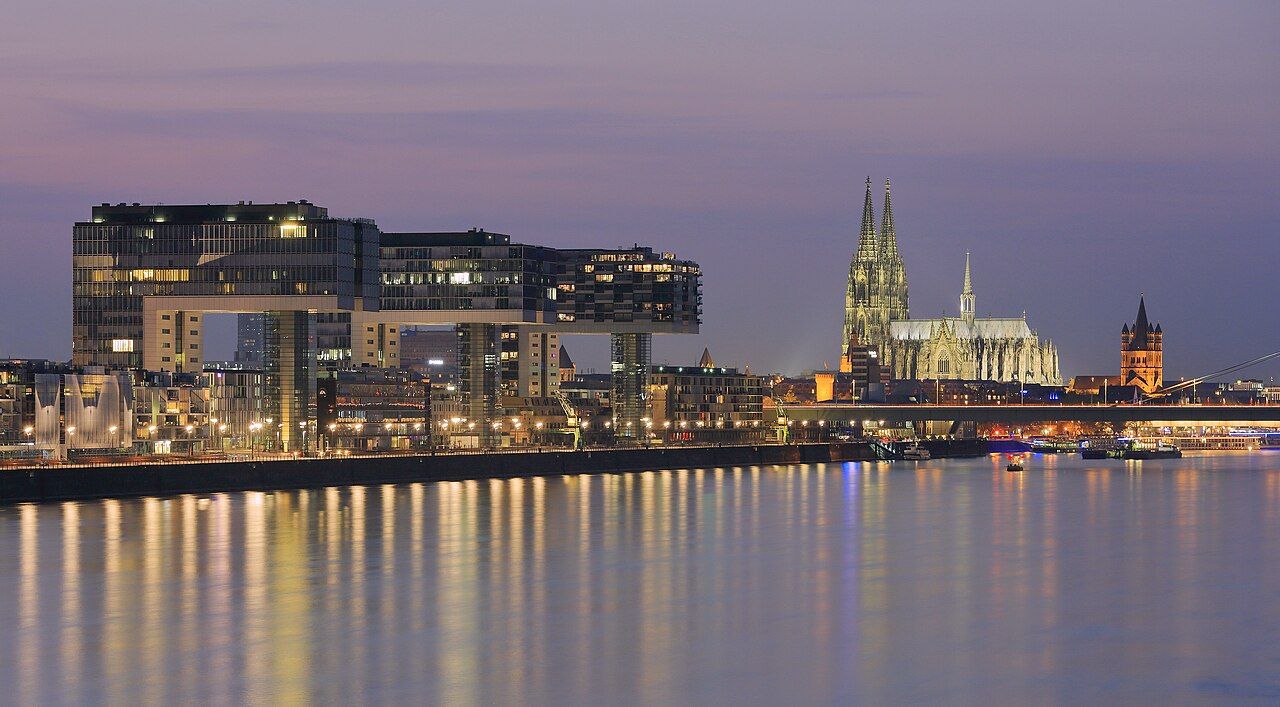
Cologne’s cathedral holds the eye; a slim glass holds the beer. Kölsch is pale, top-fermented, and brewed in and around Cologne. The glass has its own shape, and the service its own orbit.
| Drink | Kölsch |
|---|---|
| Region | Germany (North Rhine-Westphalia) |
The glass
Kölsch is served in slim, cylindrical glasses called Stangen. Each holds 0.2 litres, a small measure with a clear outline. In a beer hall, the glass is part of the custom, not merely its container.
The waiters are called Köbes, and carry a round tray. Its name is Kranz, a fitting shape for the returning glasses. An empty glass does not necessarily end the round. The Köbes keeps replacing it until a beer mat rests on top.
That quiet signal gives the ritual its punctuation. The glass arrives; the glass empties; the tray makes another circuit. The custom is brisk, but its ending belongs to the person drinking.
A name with borders
Kölsch names the beer, and Cologne’s local dialect. The shared name gives the drink a local voice, as well as a place of origin. The Kölsch Convention of 1986 limited the name to beer brewed in the Cologne area.
Since 1997, Kölsch has held Protected Geographical Indication status in the European Union. The pale beer is therefore closely tied to its city. For another beer tradition, there is Franconia's smoked-malt beer.
City marks
Cologne Cathedral was completed in 1880 and gained UNESCO World Heritage status in 1996. Its long presence gives the city’s picture a strong vertical line. The small glass offers a counterweight: close, spare, and made for a round tray.
The city’s carnival has its own exact opening. Each year, the season begins on 11 November at 11:11 in the morning. The date and hour stand out against the ordinary calendar, a civic cue as crisp as the beer’s name.
Düsseldorf lies a short way down the Rhine, known for darker, top-fermented Altbier. The contrast is plain beside Cologne’s pale Kölsch. Between cathedral, carnival, dialect, and glass, the city keeps its character in view—and within reach of the tray.
Images on this page: Martin Falbisoner (Creative Commons BY-SA 4.0); Ermell (Creative Commons BY-SA 4.0); Txllxt TxllxT (Creative Commons BY-SA 4.0); iMahesh (Creative Commons BY-SA 4.0).