Beer Citiespoured: RauchbierGermany (Bavaria)
Bamberg, Smoke and the Hillside Cellars of Franconia
Bamberg’s river island and cathedral lead to Rauchbier, dried over beechwood fires, and the summer custom of gathering above old cellars.
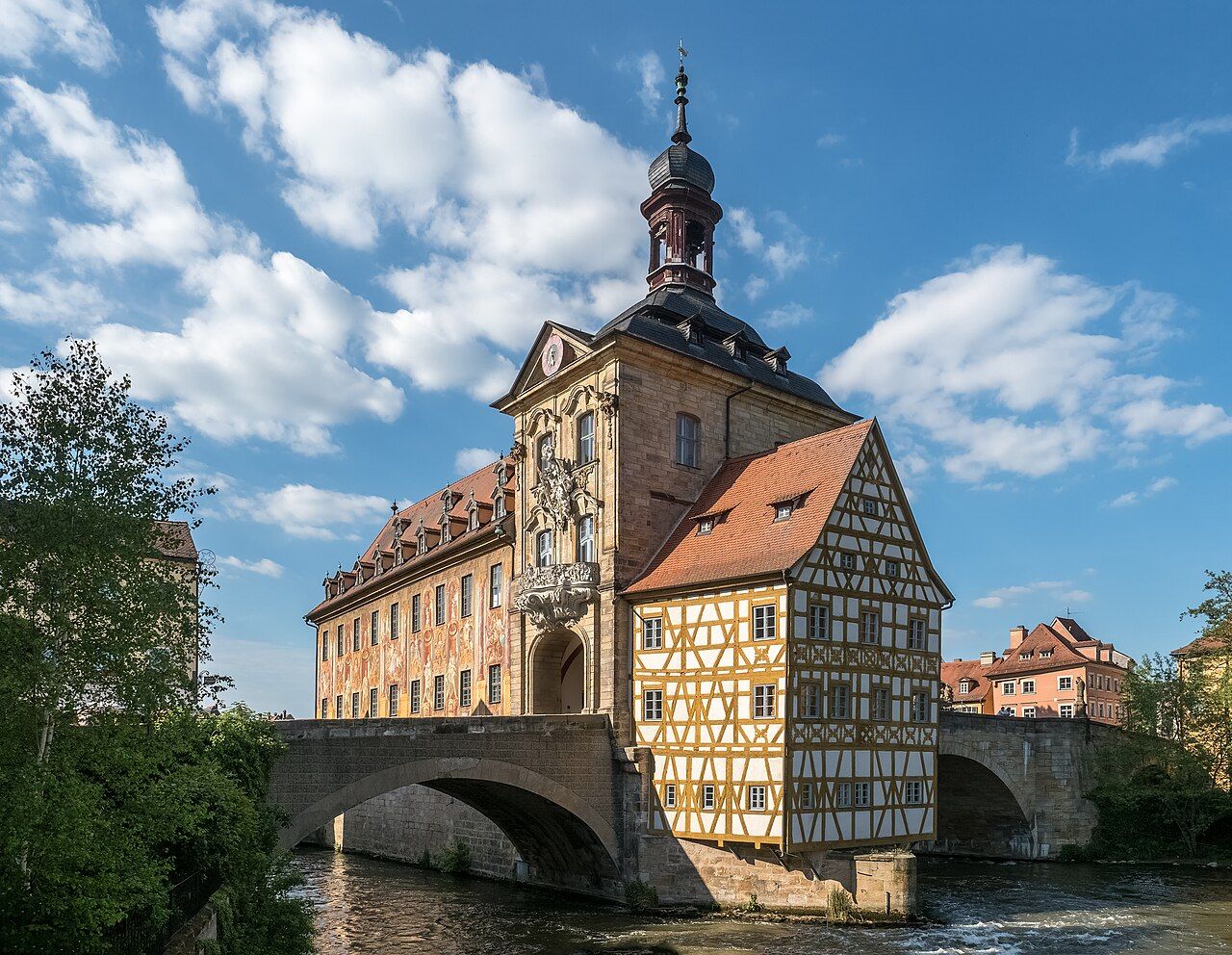
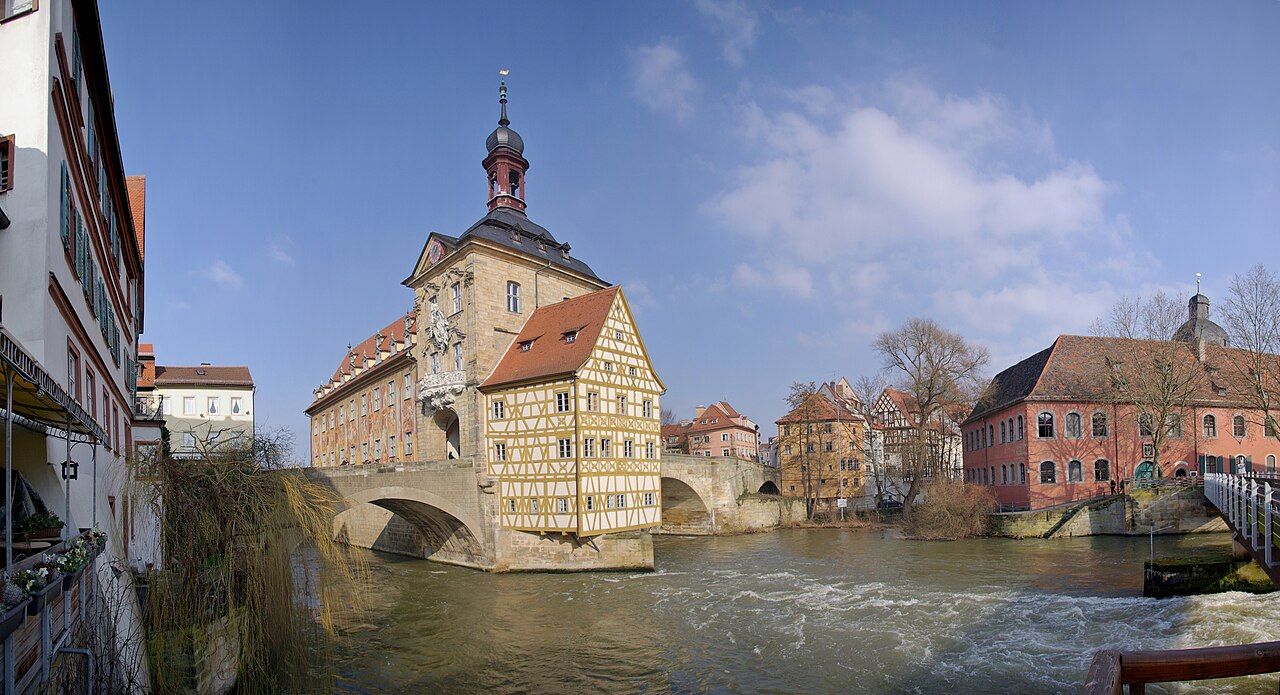
The Regnitz divides the scene around Bamberg’s artificial island. On it stands the Old Town Hall, poised above water. Along another bank, Little Venice’s fishermen’s houses line the river. The city’s history begins with these close, layered views.
| Place | Bamberg, Upper Franconia |
|---|---|
| Drink | Rauchbier |
| Region | Germany (Bavaria) |
A route through the layers
Start at the river
Begin with the Old Town Hall, standing on its artificial island. The Regnitz makes that position legible without explanation. Water frames the building, while the town gathers around it. Nearby, Little Venice follows the bank with fishermen’s houses. The name suggests a comparison, but the houses remain the point. Their line brings the river into the old town’s daily scale. In 1993, Bamberg’s old town joined UNESCO’s World Heritage List. That inscription gives the streets a formal history, but not their whole character. The river supplies a quieter beginning, one made of banks, houses, and crossings. This is a city best read in layers, not slogans.
Take in the hills
Bamberg is built on seven hills and sometimes called Franconian Rome. The nickname carries a grand sound; the hills do the actual work. They give the city a changing outline, with views rising and falling. A walk between levels turns the place into a sequence. One slope leads the eye upward; another brings it back. Nothing needs adding to the comparison. Its useful meaning is simple: Bamberg’s shape rewards attention to elevation. The hills also set up a local custom that belongs to summer. Across Franconia, going to the Keller means visiting a hillside beer garden built over old storage cellars. The city’s slopes make that custom feel rooted, not decorative.
Meet the brewing landscape
Upper Franconia has around 200 breweries, often cited as the world’s highest brewery density. The number gives the landscape a different measure. Hills and old streets sit within a region thick with brewing. The fact is large; the experience can stay local. Bamberg’s own smoked beer offers a precise way into that wider field. Rauchbier is brewed with malt dried over beechwood fires. Its name keeps the smoke close to the glass. Bamberg’s beer story also sits beside the city where golden lager began. The contrast is enough without forcing a rivalry. Here, smoke gives the region’s brewing language a distinct note.
Climb toward Michaelsberg
The Franconian Brewery Museum sits in the former monastery brewery on Michaelsberg. The setting joins brewing with another layer of the city’s past. A former monastery brewery is already a useful phrase to linger over. It holds work, place, and history together without smoothing their edges. Michaelsberg adds height to that thought. Below, the old town gathers around river and hills; above, brewing history occupies its former home. The museum makes a clear pause in the route. It is a place to consider how a regional brewing landscape can be both broad and particular. Around 200 breweries fill the wider frame; this former brewery narrows it again.
Enter the cathedral
Bamberg Cathedral carries history in stone and burial. It holds the tomb of Emperor Henry II and his wife Kunigunde. Inside, the Bamberg Horseman stands as a 13th-century stone statue of a rider. These details place different kinds of memory together. A tomb marks named lives; the rider keeps an image in view. The cathedral therefore adds another register to Bamberg’s layered history. The city is not only river, hillside, and beer. Its old town’s UNESCO inscription in 1993 sits alongside these more intimate encounters. The dates and names make history specific. The stone, meanwhile, leaves room for looking without a timetable.
Follow the smoke
Rauchbier begins with malt dried over beechwood fires. That method gives the beer its defining idea before any glass appears. Smoke gives this beer its first clear punctuation. The phrase is plain, but the flavour’s premise is not. Beechwood fires sit behind the name, and the name carries them forward. In Bamberg, smoked beer belongs to a brewing landscape already dense with other breweries. It does not need to stand for every beer in Upper Franconia. Its character is narrower and more interesting that way. The city offers a particular tradition, held within a region that often cites its brewery density as the world’s highest.
Finish above the cellars
Set aside the idea of a cellar below street level. In Franconia, a Keller can mean a hillside beer garden built over old storage cellars. Going there is a summer custom across the region. The arrangement makes storage and gathering share one slope. For Bamberg, the hills now join the beer story directly. The Sandkerwa offers another seasonal thread: Bamberg’s largest folk festival takes place in late August, in the old fishermen’s quarter. That setting returns the route to the river and Little Venice. Festival, houses, hillside, smoke: each belongs to a different view of the same city. The order can remain open. Which layer would hold the longest?
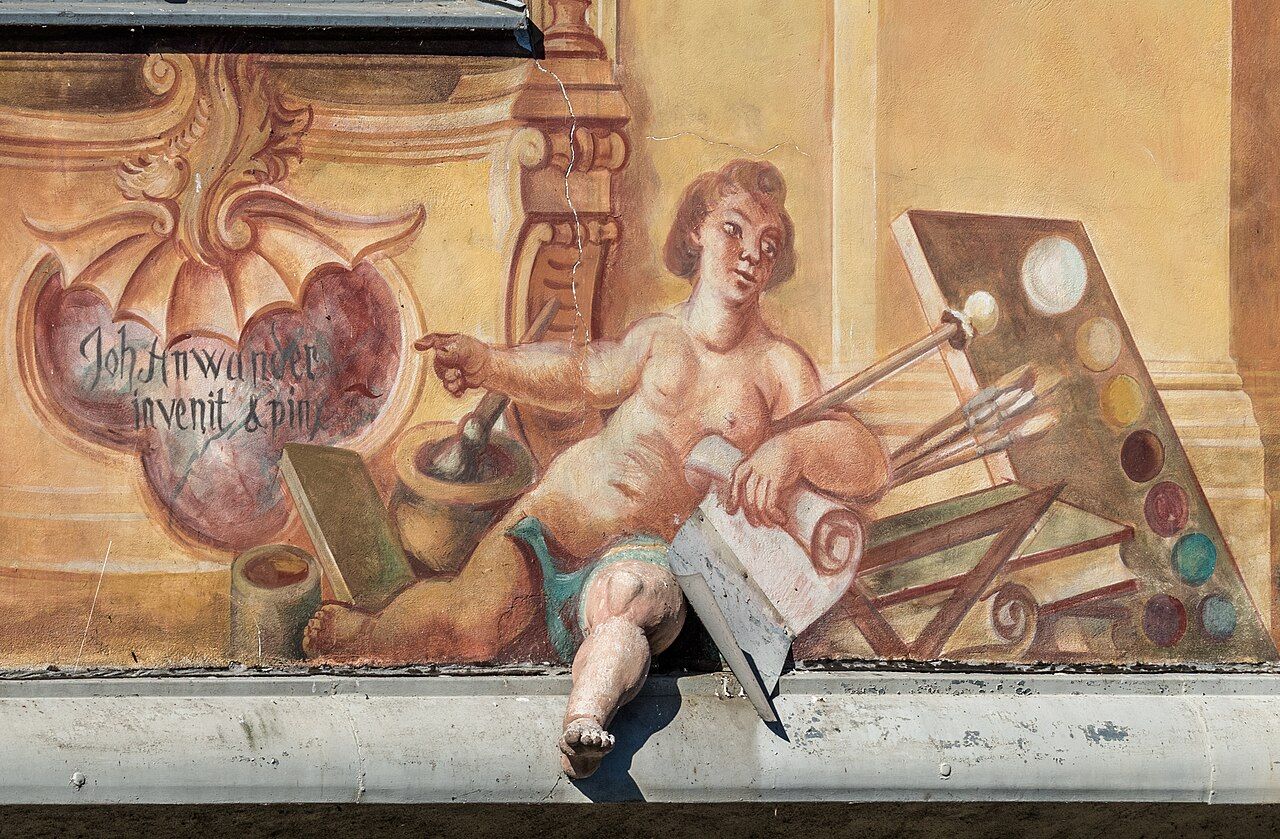
Smoke gives this beer its first clear punctuation.
Images on this page: Ermell (Creative Commons BY-SA 4.0); Berthold Werner (public domain) original; ermell (Creative Commons BY-SA 4.0); iMahesh (Creative Commons BY-SA 4.0); Dguendel (Creative Commons BY 4.0); Martin Falbisoner (Creative Commons BY-SA 4.0).