Wine Countrypoured: Chasselas white wineSwitzerland (Vaud)
Chasselas on the Stone Terraces of Lavaux
A slow walk and a short train ride trace Lavaux’s stone terraces, where Chasselas vines, lake and hillside villages share a long, changing slope.
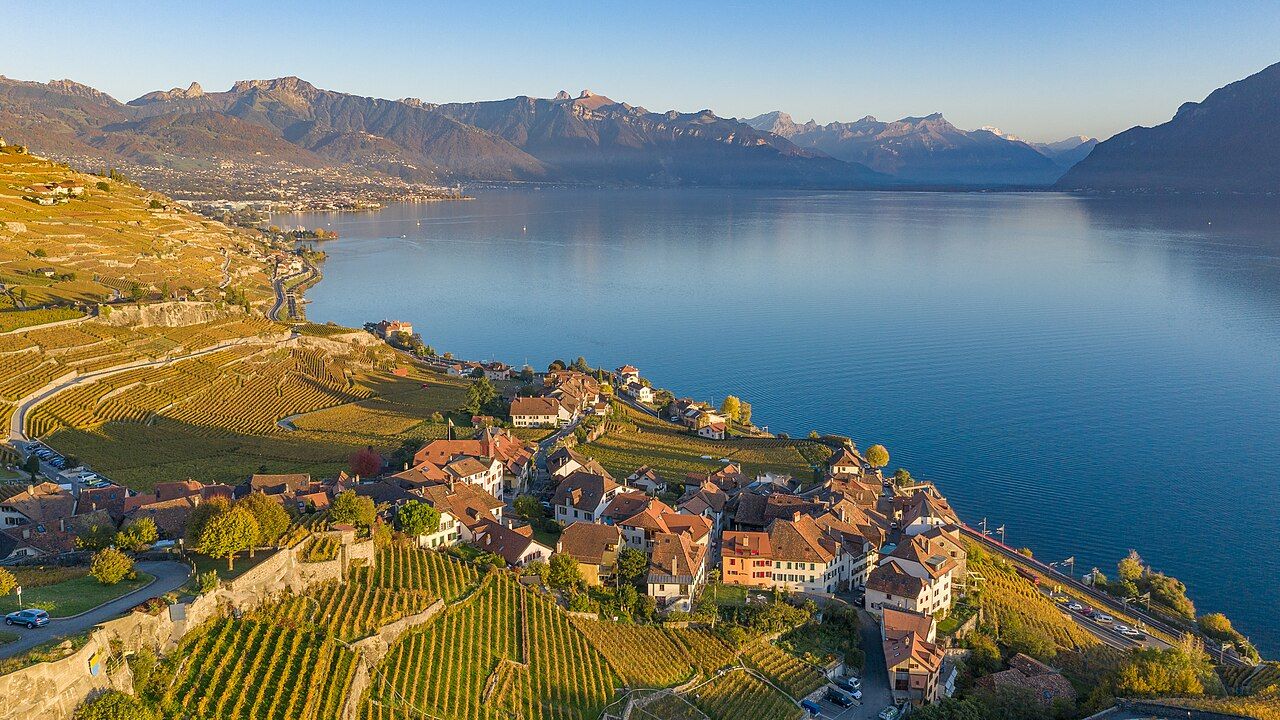
The lake opens below the terraces, broad and still. Above it, vines cross the slope in measured rows. Stone walls hold their lines between villages and water. Lavaux asks for a slower pace, then offers a train ride onward.
| Drink | Chasselas white wine |
|---|---|
| Region | Switzerland (Vaud) |
| Landscape | Terraces above Lake Geneva |
Across the slope
UNESCO inscribed the site in 2007 under the name Lavaux, Vineyard Terraces. Its landscape covers more than 800 hectares of terraces, walls, villages and paths. Those elements belong together, like lines in a patient drawing. From the paths, the pieces settle into a single landscape.
The vineyards run for about 30 km along the lake’s northern shore. This is its south-facing side, from Lausanne’s eastern edge towards the Château de Chillon. The scale comes into focus slowly. Each bend makes the long slope feel newly assembled.
The terraces can be traced to the 11th century. Benedictine and Cistercian monasteries then controlled the land. That beginning gives the walls a deeper measure than their height. The present landscape keeps a record of labour, arranged across stone and soil.
There is no need to hurry between the villages. Footpaths link them across the slopes, and train stops make a walk possible in sections. The path offers its own small rhythm: vines, wall, village, lake. Then the pattern begins again.
The villages are strung along the hillside: Lutry, Cully, Epesses, Rivaz, Saint-Saphorin and Chexbres. Their names arrive with the route, not as a checklist. Each belongs to the same long relationship between cultivated slope and water.
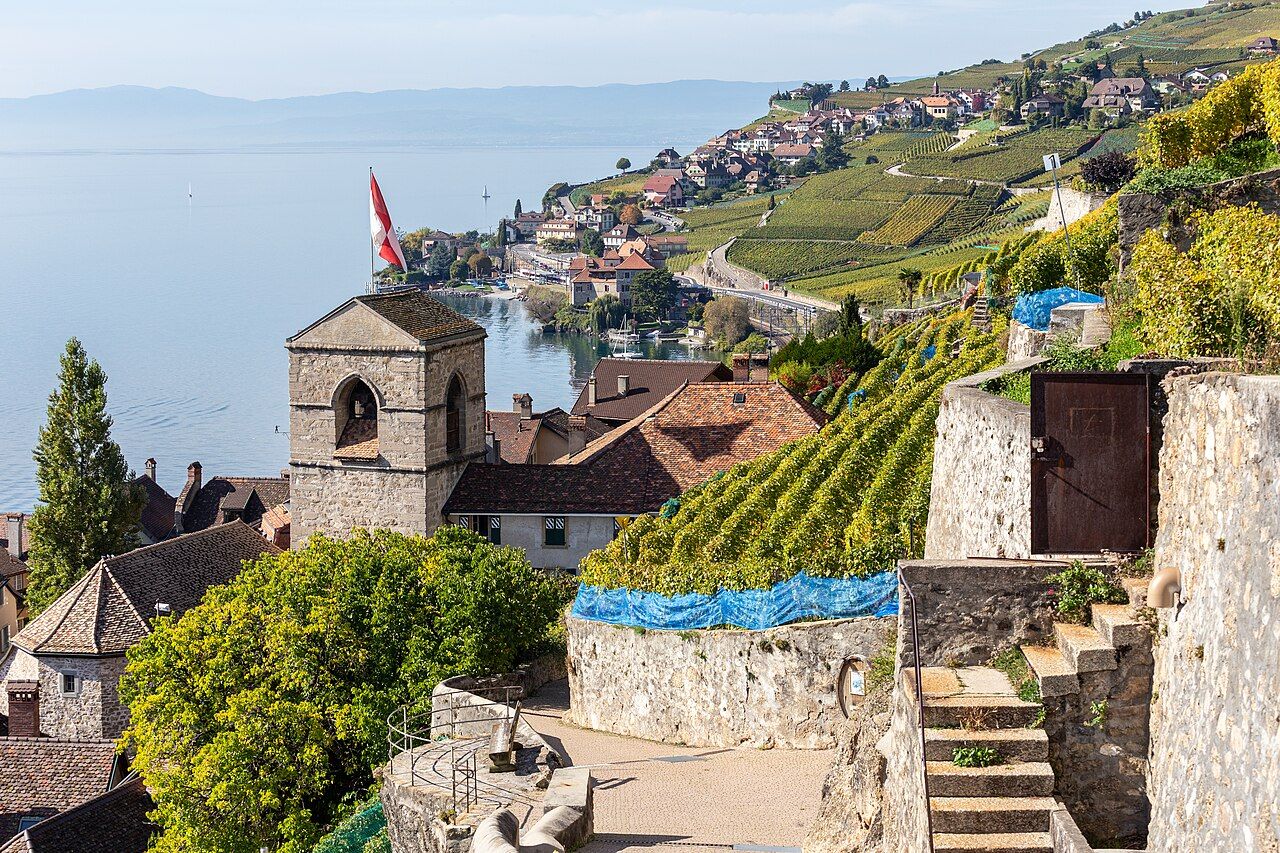
Chasselas is Lavaux’s main grape. It gives light, mineral white wines, a restrained expression beside the stone. The grape seems well matched to this landscape, where warmth is counted carefully and the views keep their breadth.
The growers speak of three suns warming the vines: the sun in the sky, its reflection from the lake, and heat stored in stone walls. The idea suits a place built from exposure and patience. The growers count three suns: sky, lake and stone.
The growers count three suns: sky, lake and stone.
The terraces make that local arithmetic visible. Rows climb the slope, while walls divide and hold the ground. The lake lies below, returning the sun’s light. Stone keeps heat after the day’s direct warmth has passed.
Dézaley and Calamin are the two Grand Cru appellations within Lavaux. Their names sit within the broader patchwork of vineyards and villages. Here, distinctions are carried by place as much as by grape, though the slope remains the clearest guide.
The stone terraces invite a comparison with the steep slate slopes of the Mosel. Both phrases suggest a vineyard shaped by a difficult angle. Lavaux has its own materials and its own lake, held in view from village paths.
Between stops
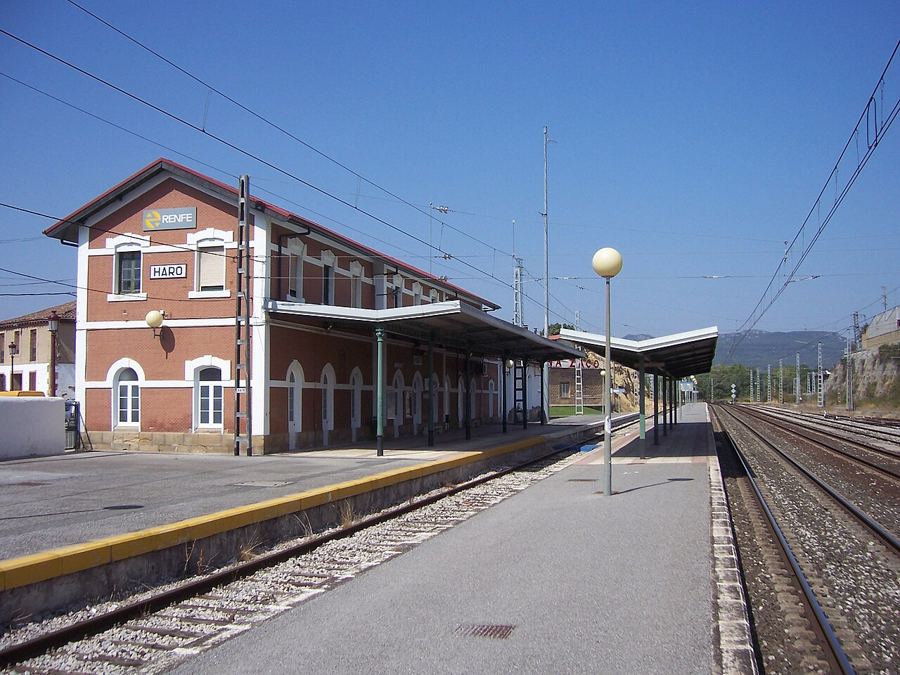
Regional trains on the lakeside line run between Lausanne and Vevey. They stop at villages such as Lutry and Cully. A short ride can join two stretches of walking, leaving the hillside to set the pace between stations.
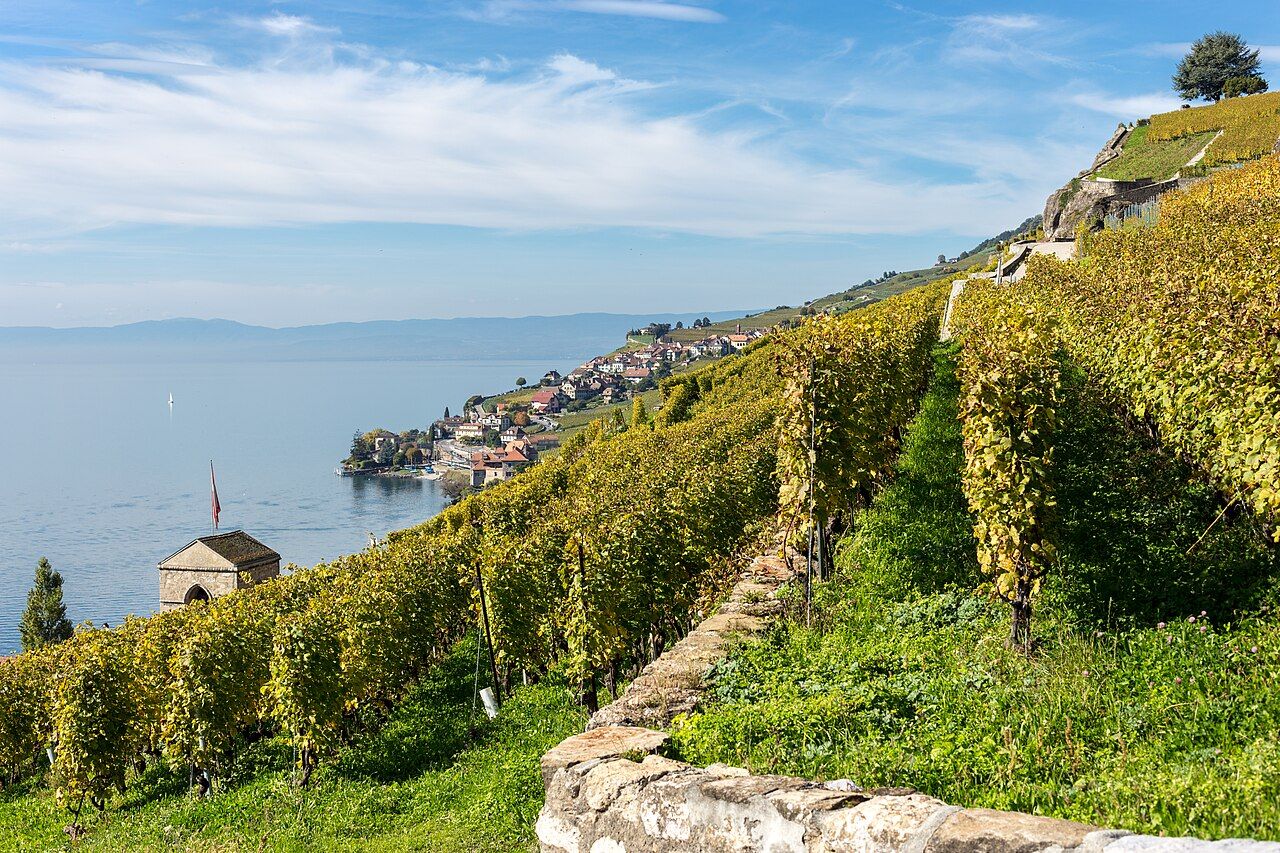
Another small line climbs from Vevey through the vineyards to Puidoux-Chexbres. Its nickname is Train des Vignes. The climb gives the route a different shape: the railway rises through the same working landscape that footpaths cross.
The two kinds of movement suit Lavaux. Walking lets the walls and paths arrive one piece at a time. The train gathers distance more quickly, without removing the vines from view. Neither needs to turn the landscape into a race.
In the villages, the terraces press close to ordinary life. Paths link one settlement to another, then continue across the slopes. The walk can be shaped around the train stops, with no need to cross the entire area at once.
Harvest usually comes from late September into October. In those weeks, the vines enter a different kind of attention. The work follows the season, while the paths and walls remain in place around it.
Even outside harvest, the rows suggest careful repetition. Each terrace answers the next, and each wall interrupts the green with a firm edge. The effect is neither wild nor rigid. It feels made through long familiarity with the hillside.
That balance is what the walk leaves behind: cultivated land, open water, and villages held between them. A train can carry the route onward, or the footpath can keep crossing the slope. Which measure of Lavaux would linger longer?
Images on this page: Lorenz Poffet (Creative Commons BY-SA 4.0); JoachimKohler-HB (Creative Commons BY-SA 4.0); JoachimKohler-HB (Creative Commons BY-SA 4.0); BigSus (Creative Commons BY 2.5); Kora27 (Creative Commons BY-SA 4.0); PM (public domain) original.