Spirit Landspoured: PiscoPeru (Ica)
Pisco and the Vineyards of Ica
Pisco travels from its namesake port to Ica’s grape country, where old clay jars, desert dunes and a March harvest festival shape the story.
At the port of Pisco, a name set out to sea. In colonial times, the port shipped the grape spirit that carried it. Inland, Ica gives that name another landscape: vines, desert and an oasis among tall dunes. The journey follows the drink through places and practices, rather than one straight road.
| Drink | Pisco |
|---|---|
| Region | Peru (Ica) |
| Harvest festival | Festival de la Vendimia, each March |
| National Pisco Day | The fourth Sunday of July |
Begin at the port
Start with the name, before following the grapes inland. Pisco is grape brandy made in Peru and Chile. Both countries claim it as their own. Its name comes from the port of Pisco, on Peru’s southern coast, where the spirit was shipped in colonial times. The place and the drink remain joined by that old passage.
Once, pisco travelled and waited in clay jars called botijas. Their name belongs to the practical history of the spirit. The port’s role was not only to give pisco a name, but also to send it onward. From there, the story turns towards the vines and the valleys.
Follow the grapes
Spanish settlers brought grapevines to Peru in the 16th century. In Ica, the grape harvest still gives the year a public marker. The Festival de la Vendimia takes place each March. Its name points to the season’s work, while its place points back to the region’s close bond with pisco.
Peru’s national tourism portal, peru.travel, presents Ica as the heart of the country’s pisco country. That phrase makes a useful centre for the journey. The region’s identity rests not on one bottle alone, but on grapes, distilling and a festival that marks their harvest.
Argentina's grape harvest celebration offers another harvest-season point of comparison, across a national border.
Read the varieties
Peruvian pisco begins with grapes, but not all varieties carry the same character. Quebranta is the main non-aromatic grape. Italia, Torontel and Moscatel are aromatic varieties. The names offer a small map of the spirit’s raw material, without needing a long list of tasting claims.
Its making has a clear distinction: Peruvian pisco is distilled to bottling strength. No water is added, and it is not aged in wood. The result comes from the grape and the distilling, rather than a wooden vessel lending another layer. Here, the method is spare, and the wording is precise.
Look to the desert
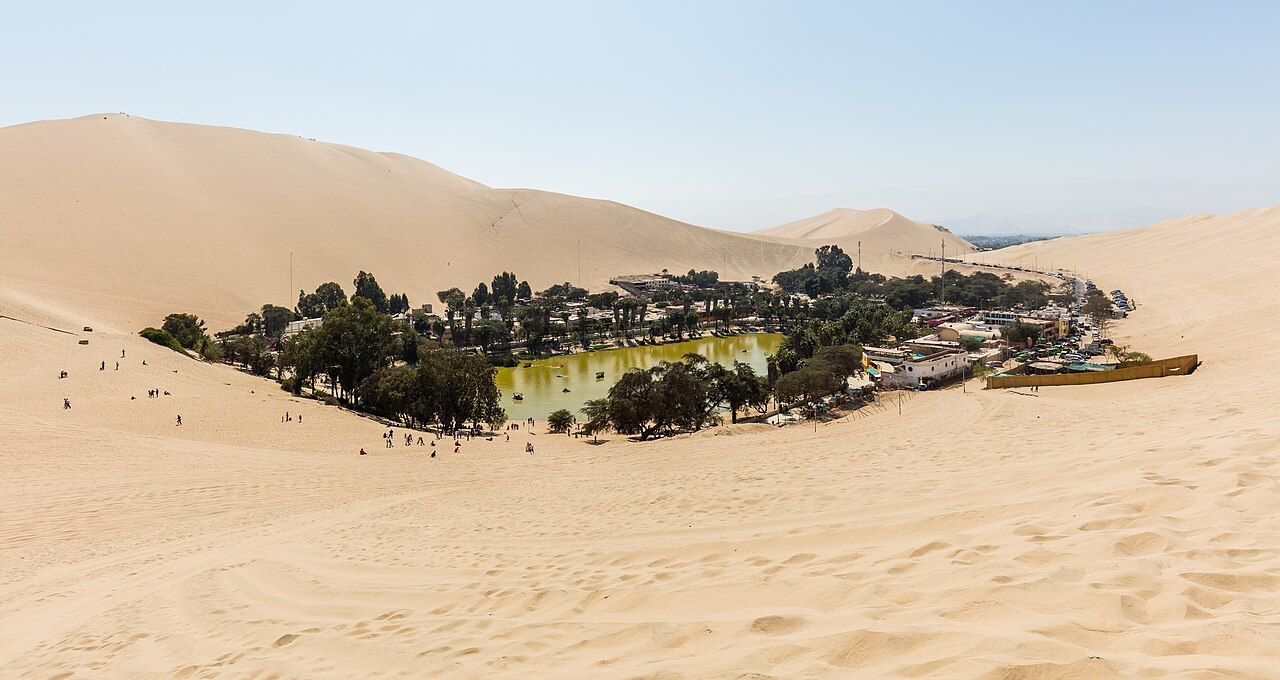
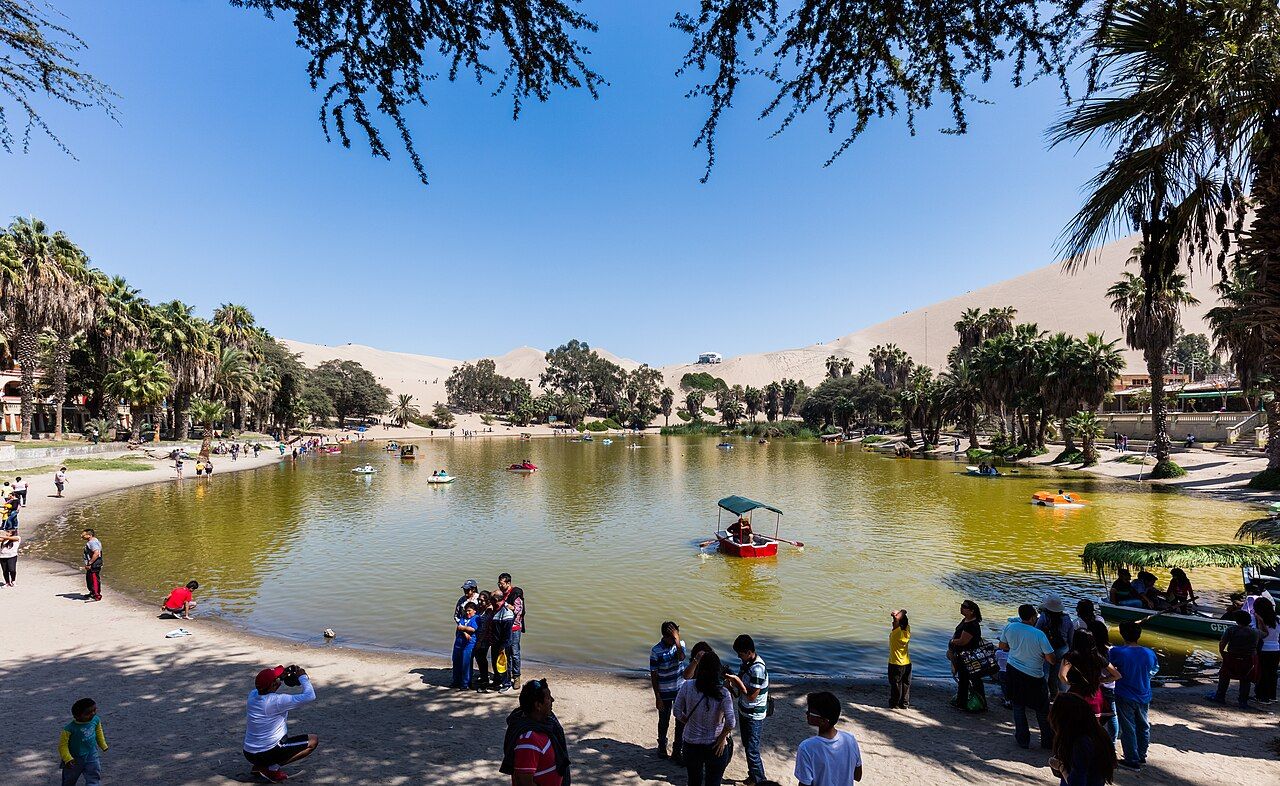
Just outside the city of Ica, the Huacachina oasis lies among tall sand dunes. The oasis changes the shape of the story. Grapes and pisco belong to Ica, but the surrounding image is also desert. The contrast gives the region its particular outline: cultivated fruit beside sand and water.
South of the town of Pisco, the Paracas National Reserve protects desert coast and sea. It extends the journey from port to a broader meeting of land and water. Pisco’s geography is not only inland vineyards. Its southern coast remains part of the same regional story.
Finish with the glass
For a final step, follow pisco into a pisco sour. Lime juice, sugar and egg white are shaken together with the spirit. Drops of aromatic bitters go on top. The drink brings several distinct notes into one glass, with the bitters saved for its final mark.
National Pisco Day falls on the fourth Sunday of July. The March harvest festival and July observance give the spirit two different seasonal markers. One gathers around grapes; the other names pisco itself. Between them sit a port, a desert oasis and the old clay jars. The trail ends at the glass, with its name still pointing back towards Pisco.
Images on this page: Diego Delso (Creative Commons BY-SA 4.0); Diego Delso (Creative Commons BY-SA 4.0); MSeses (Creative Commons BY-SA 4.0); Juan Carlos Fonseca Mata (Creative Commons BY-SA 4.0); sourabh.biswas (Creative Commons BY-SA 4.0).