Tea & Coffeepoured: Darjeeling black teaIndia (West Bengal)
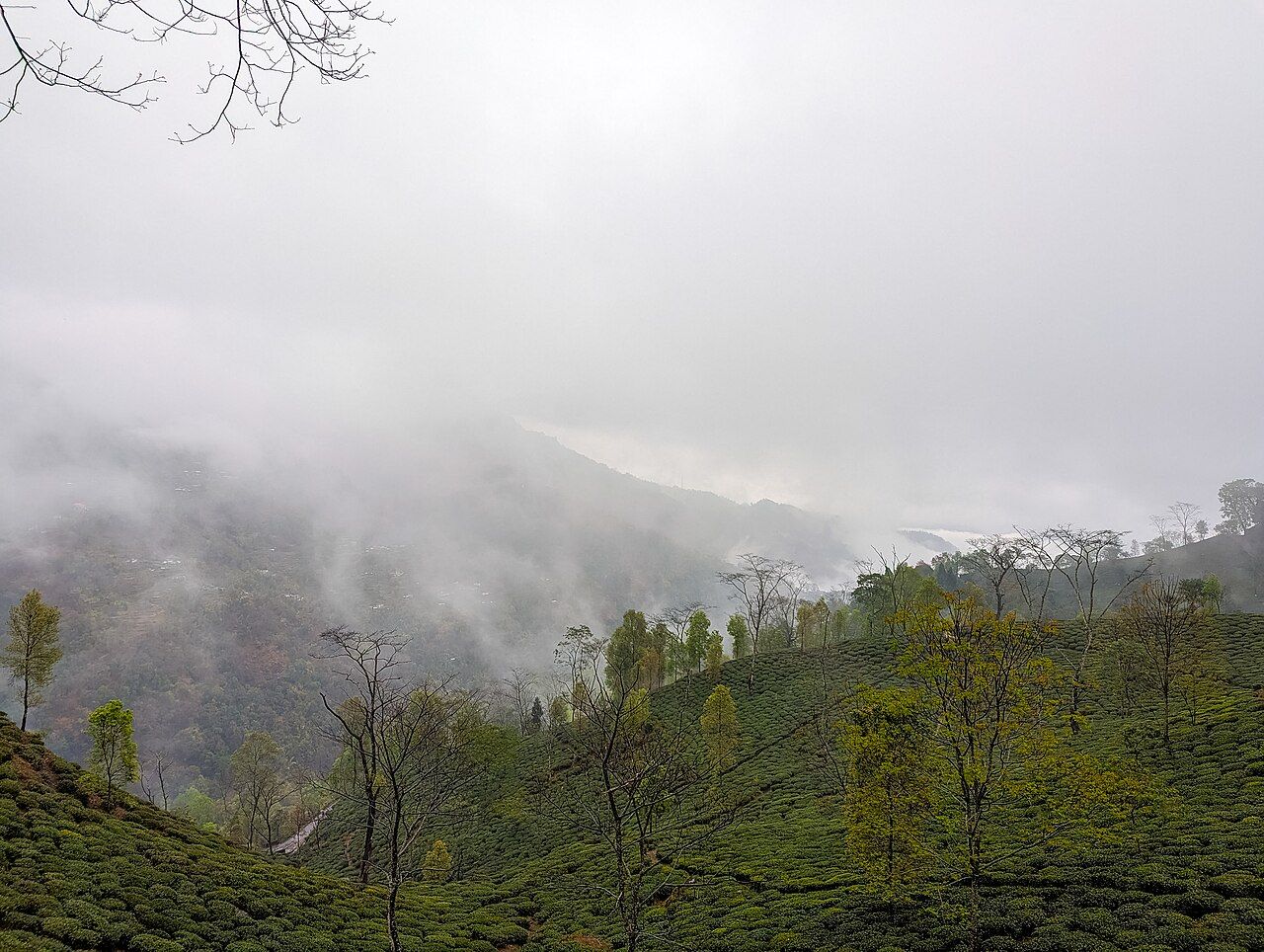
Darjeeling: Tea Gardens below Kanchenjunga
A narrow-gauge railway climbs from the plains to Darjeeling, where tea’s spring and early-summer flushes meet a high Himalayan setting.
In 2004, Darjeeling tea became India’s first product with a Geographical Indication tag. That distinction gives this hill town a useful starting point. The railway climbs into the foothills, while tea offers its own measured sequence. A visit can follow both, from the plains upward, then through the picking year.
| Fact | Detail |
|---|---|
| Tea | Darjeeling black tea |
| Region | West Bengal, India |
| Height | About 2,000 m |
| Railway | Darjeeling Himalayan Railway |
Steps
Begin with the tea’s protected name, not its scenery. Darjeeling tea was the first product in India to receive a Geographical Indication tag. The year was 2004, a fact that sets the region apart before the train begins climbing. The tag gives the tea a place-bound identity, not merely a name. That date sits early in the route, before track and garden take over. The name is attached to a place and a drink, rather than an abstract style. That link is the story’s steady thread. The hills give it a setting; the picking year gives it a rhythm.
Start the route at New Jalpaiguri, on the plains. The narrow-gauge toy train climbs from there to Darjeeling. Its route makes height part of the journey, rather than a number saved for a map. The Darjeeling Himalayan Railway entered UNESCO’s heritage register in 1999. The train’s climb and the tea’s identity belong together. Both lead from a broad regional name toward a particular hill town. The line links the low plain with a town set high among foothills. Its steady climb gives the story a simple order.
Follow the climb towards Ghum, where the Batasia Loop changes its shape. The track coils into a spiral, allowing the train to gain height. The Batasia Loop is a spiral of track near Ghum. Its turn makes a practical task visible: a railway must rise through steep country. Here, the route draws a curve instead of a straight line. The loop is a small lesson in the terrain, and a fine pause in the railway’s upward movement.
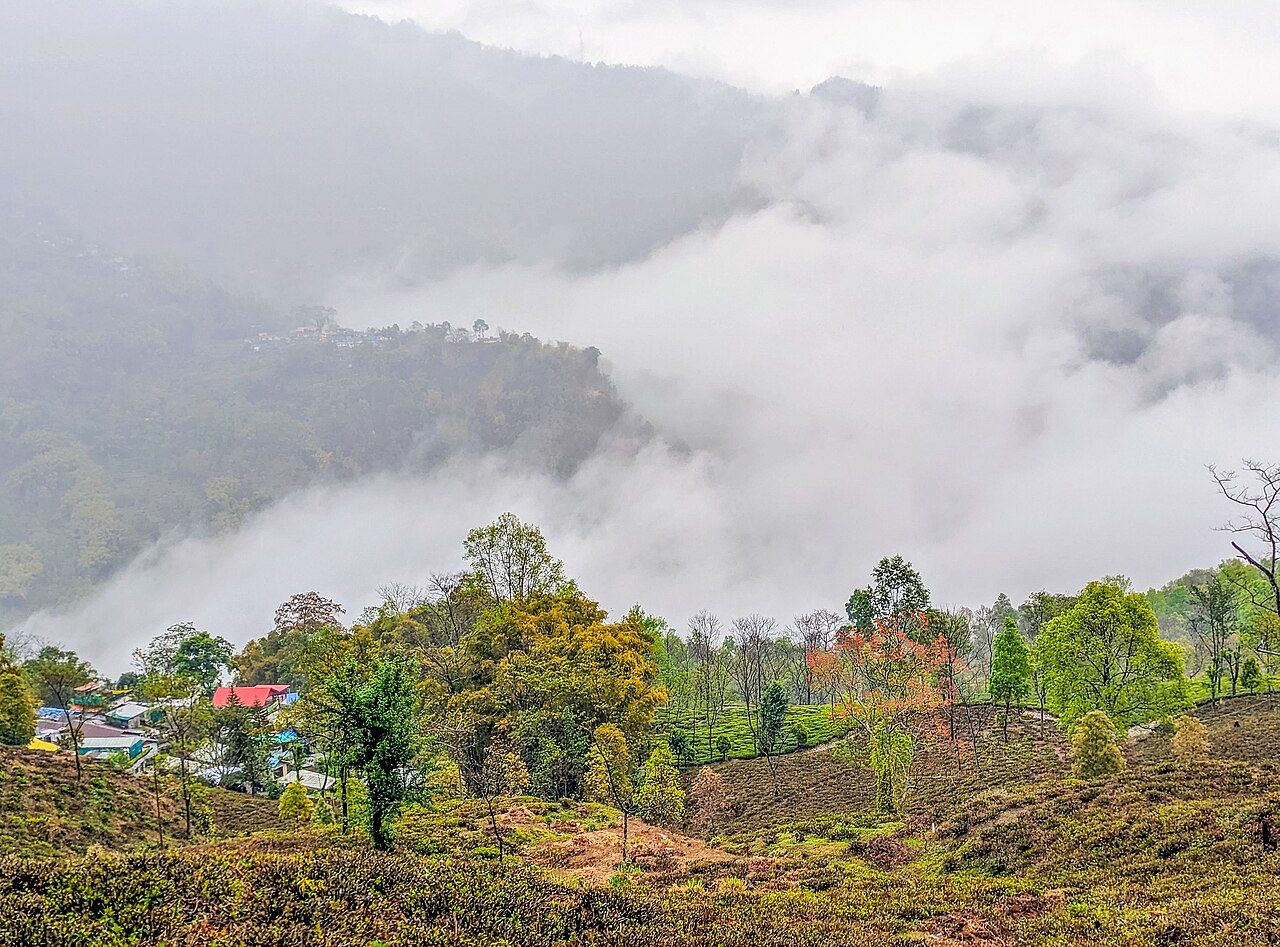
Arrive at Darjeeling with its height in mind. The town stands about 2,000 m above sea level, in West Bengal’s Himalayan foothills. That elevation is part of the place’s character, without needing elaborate claims. The town’s tea story began with planting, not with a famous label. Tea was planted in Darjeeling from the 1840s, after Archibald Campbell grew trial seedlings in his garden there. The history starts small: seedlings, a garden, and a crop taking root. The beginnings have an unshowy scale: seedlings first, then a crop taking root. That is a quiet origin for a tea whose name carries the region.
Keep the plant itself in view while considering the name. Darjeeling tea comes mostly from the Chinese variety, Camellia sinensis var. sinensis. The botanical name is precise; the resulting teas change with the picking season. Around 87 tea estates belong to the region’s present outline. That figure suggests a shared landscape, though each flush has its own character. The name gathers these details together, from plant variety to estate and season.
Follow the first flush into spring. Its leaves are picked then, and the tea is light and bright. Those two words make a clear opening note for the picking year. The first flush is not merely a date on a calendar; it offers a distinct style within Darjeeling tea. A comparison with Kyoto's shaded green tea can sharpen the sense of difference, while keeping Darjeeling’s own plant and seasons at the centre. Its distinction is in the leaf and season, not in spectacle.
Move on to the second flush, picked in early summer. It gives a fuller tea, often described as muscatel. The change from light and bright to fuller and muscatel makes the year legible through taste. Darjeeling’s tea story is not one fixed cup, but a sequence shaped by picking. That sequence sits beside the railway’s climb: one follows the slope, the other follows the seasons. The route ends with no grand reveal, only a place and its changing leaves.
Finish with Tiger Hill above the town. Kanchenjunga, the third-highest mountain on Earth, can be seen from there. The mountain gives the tea country a vast measure, while the flushes remain close to the hand and season. Darjeeling holds both scales without fuss: a high Himalayan view and a crop gathered in spring, then early summer. The railway, the tea estates, and the town’s elevation form a compact way to read the region. The view stays open; the tea year continues.
The Batasia Loop is a spiral of track near Ghum.
Images on this page: sourabh.biswas (Creative Commons BY-SA 4.0); sourabh.biswas (Creative Commons BY-SA 4.0); Bernard Gagnon (Creative Commons BY-SA 4.0); Rod Waddington from Kergunyah, Australia (Creative Commons BY-SA 2.0).