Tea & Coffeepoured: Arabica coffeeColombia (Quindío)
Salento and Colombia’s Coffee Country
From painted houses to towering wax palms, Salento frames a coffee landscape shaped by steep slopes, two harvests and farm architecture.
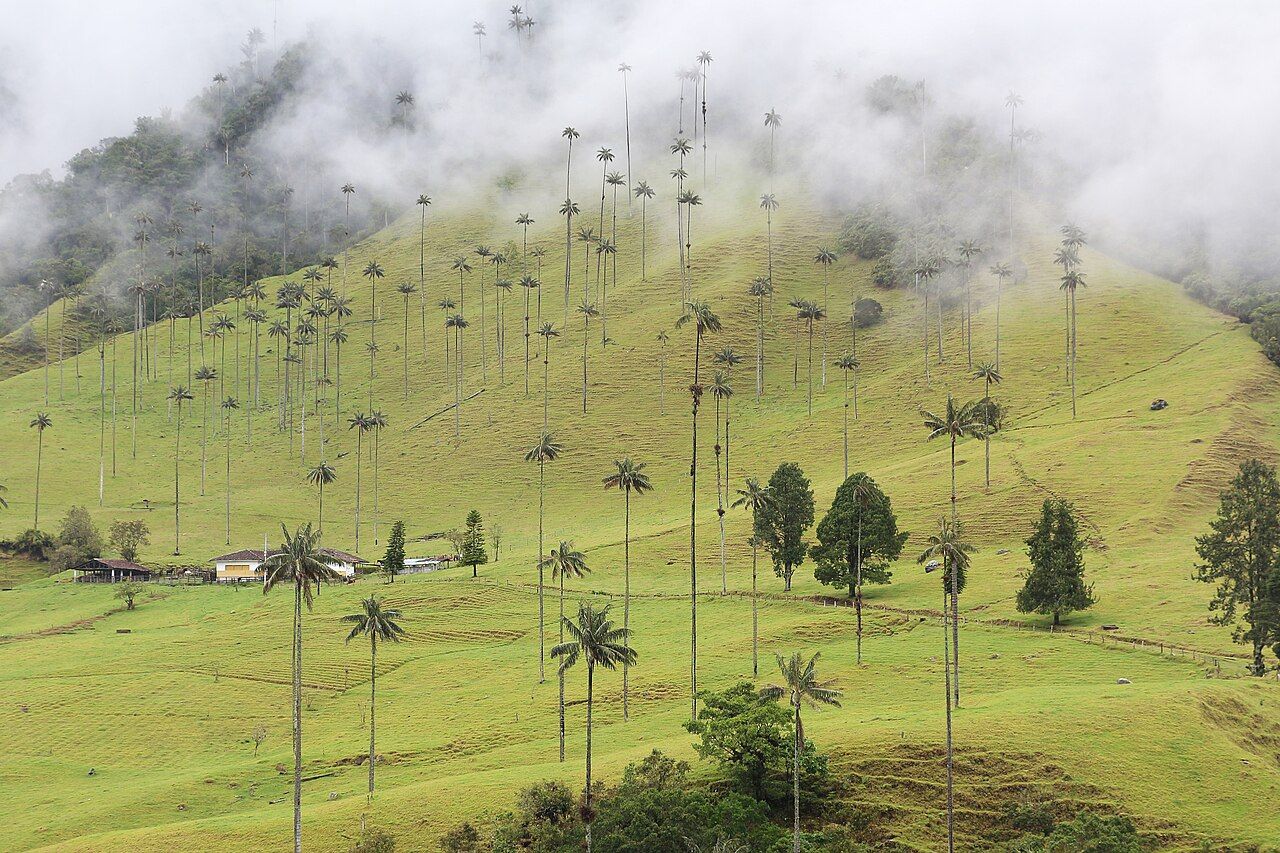
Colour runs along Calle Real in Salento, Quindío. Brightly painted houses give the town a clear first note. The painted fronts make the street a vivid line through town. Near Salento, the Cocora Valley holds another emblem: the Quindío wax palm, Colombia’s national tree.
| Drink | Arabica coffee |
|---|---|
| Region | Colombia (Quindío) |
| Harvests | Main crop and mitaca |
Coffee country
The Coffee Cultural Landscape of Colombia reaches beyond Quindío. It spreads across Caldas, Quindío, Risaralda and Valle del Cauca. UNESCO inscribed the landscape on its World Heritage List in 2011. The designation holds a broad geography together, with coffee country written across several departments. The four departments make the landscape larger than any single town. Quindío is the story’s close frame, but not its whole map.
Arabica grows on steep slopes, at roughly 1,000 to 2,000 metres. Those numbers mark a landscape of rising ground, rather than a single flat field. The slopes set the scene for coffee, while the region’s towns and farms share its wider frame. The wider story reaches toward coffee's original forest homeland, while this account stays with Colombia’s central Andes.
Here, the harvest arrives in two turns each year. The main crop gives the calendar its larger measure. A smaller harvest, called the mitaca, follows as the second part. The pair belongs to the region’s working rhythm, a quiet counterpoint to the long slopes. Coffee country is measured not only in distance, but also in returns. Together, the two harvest names put a recurring shape around the year. The smaller mitaca gives the second crop its own name and measure.
Houses and palms
Many older farmhouses are built in bahareque. The material combines bamboo, wood and earth. Its name is more compact than its ingredients. These houses offer another way to read the landscape: not only through coffee fields, but through the materials used on farms. The built form remains part of the region’s character. Bahareque’s three materials make the older farmhouses legible through their construction. Each material stays plain in the description, but the mix is distinctive.
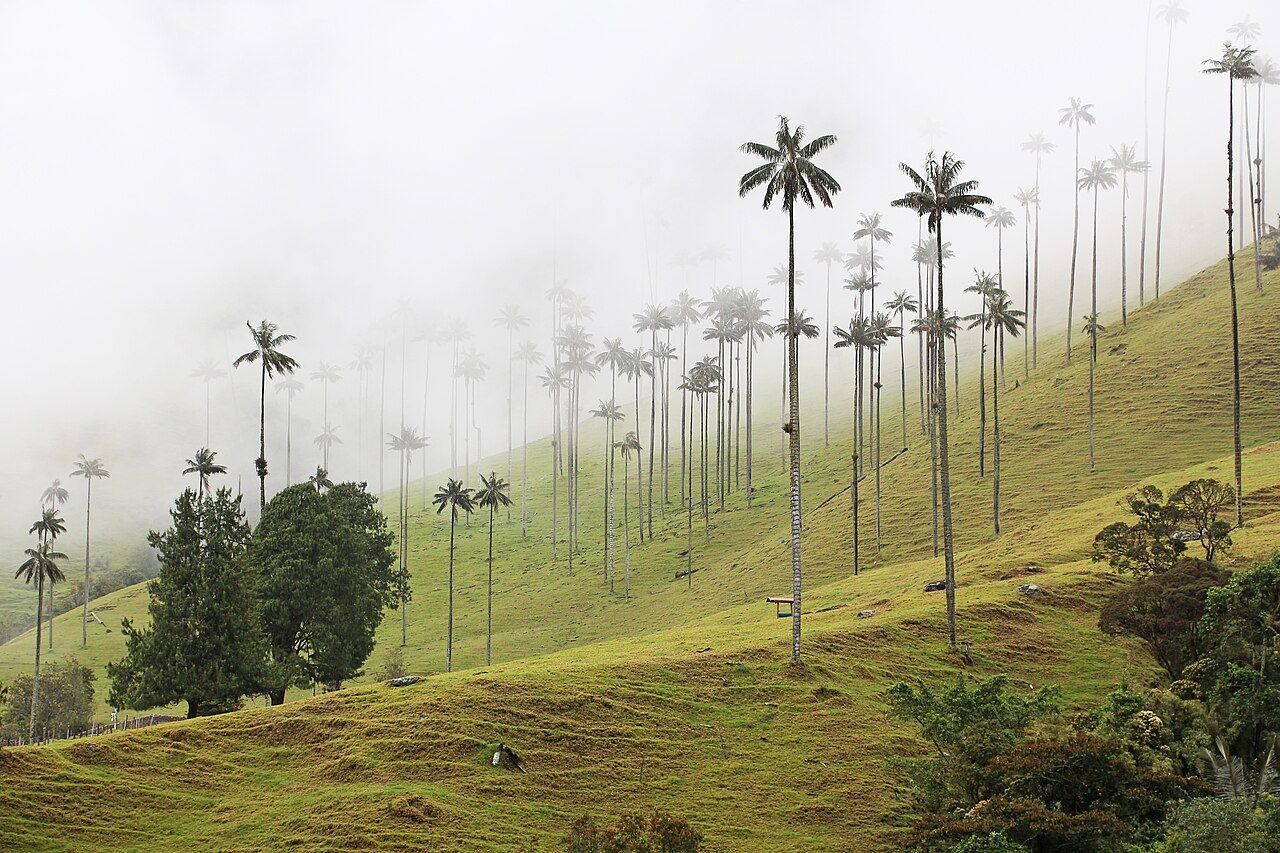
In Cocora Valley, the Quindío wax palm gives the landscape a striking measure. It can grow taller than 50 metres, among the tallest palms in the world. Its height makes a different kind of landmark from a town street or farmhouse. The palm is both a national tree and a defining presence near Salento. The wax palm’s height changes the scale of this account once more. From street to slope to palm, the landscape keeps shifting its measure.
Salento’s Calle Real brings the story back to painted houses. The town sits within Quindío, one part of a landscape spread across four departments. Manizales, Pereira and Armenia are the coffee region’s main cities. Old jeeps still carry people and coffee sacks between towns and farms. Their work connects the region’s settlements to its slopes.
The landscape holds several scales at once: a street, a valley, a region. Salento makes a close frame, while the departments widen the view. Coffee grows on steep ground, returns in two harvests, and shares its setting with old farmhouses and tall palms. The scene keeps opening out.
Images on this page: Bernard Gagnon (Creative Commons BY-SA 4.0); Bernard Gagnon (Creative Commons BY-SA 4.0); sourabh.biswas (Creative Commons BY-SA 4.0); Grissef (Creative Commons BY-SA 4.0).