Harvests & Festivalspoured: Festival beerGermany (Bavaria)
Oktoberfest: From a Royal Wedding to the Theresienwiese
A wedding gave Oktoberfest its beginning; a named ground, a tapped keg and a parade carry its customs forward in Munich.
One wedding began Oktoberfest, and its memory still names the grounds. The festival’s story moves from a royal celebration to a carefully marked opening. Beer, brass music and costume give that history its present shape. The sequence matters more than spectacle here. Each custom offers another way to read the festival.
Festival frame
| Festival | Oktoberfest |
|---|---|
| Region | Germany (Bavaria) |
| Drink | Festival beer |
| Length | About 16 to 18 days |
| Grounds | Theresienwiese |
Begin with the wedding. Oktoberfest began with the celebration of a royal wedding in October 1810. Crown Prince Ludwig of Bavaria married Princess Therese of Saxe-Hildburghausen. The first reason for the festival was not a beer custom, but a marriage. That beginning gives the celebration a different centre of gravity. Its past is not an abstract page behind the present. It remains in the names that the festival carries. Read from this beginning, Oktoberfest is both a public occasion and a record of a royal celebration.
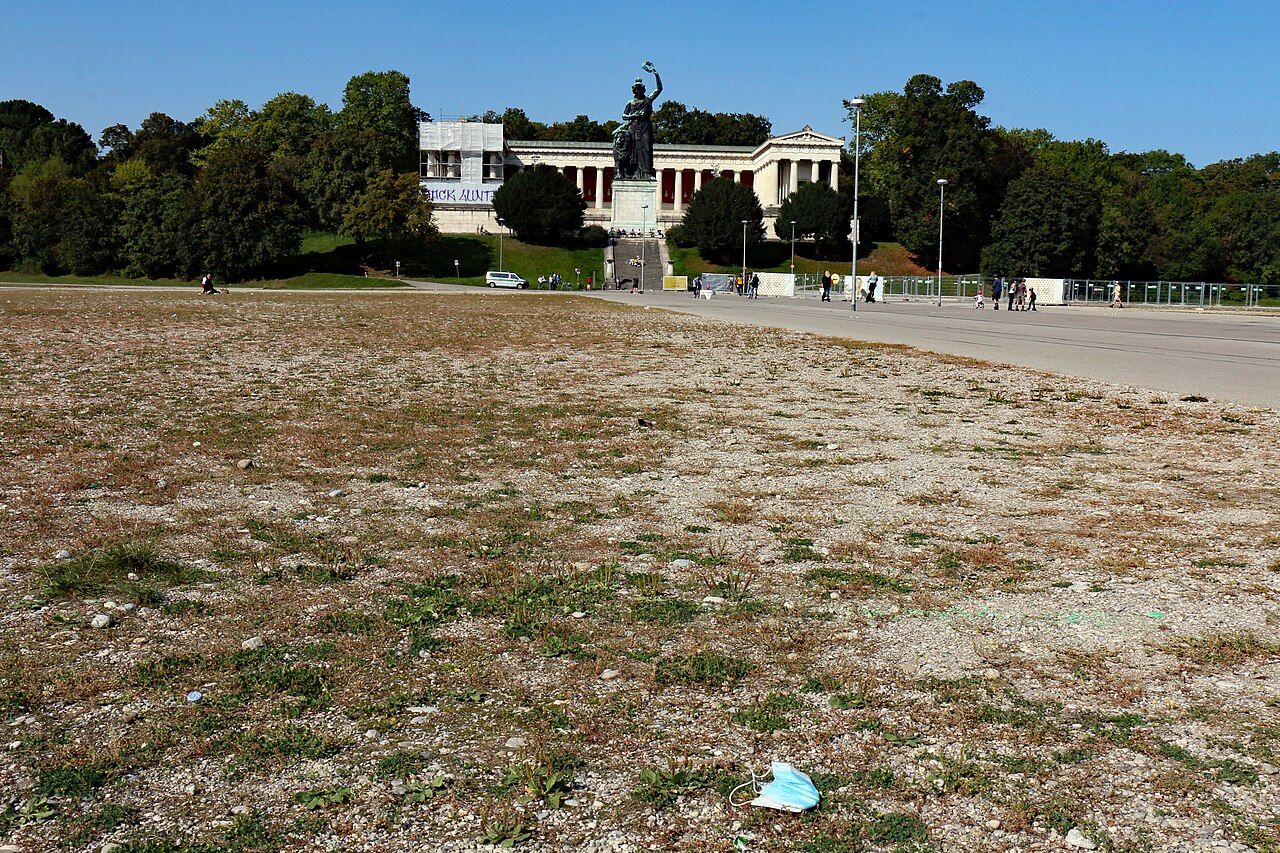
Read the name of the ground. The festival takes place on the Theresienwiese, named after Princess Therese. Here, the name of the ground carries the festival's beginning. The connection is direct, and worth pausing over. A place-name can keep a story close without explaining it at every turn. The Theresienwiese does just that. It makes Princess Therese part of the setting, not simply part of the opening chapter. The name belongs to the festival’s geography and its memory at once.
Set the festival in its calendar. Oktoberfest runs for about 16 to 18 days. It ends on the first Sunday of October or on 3 October. The city's official festival portal publishes each year's dates and programme. Those details place the festival in a calendar, while its beginning reaches back to October 1810. The official festival portal is a useful phrase for that civic doorway. The dates and programme are the practical frame; the older story gives the occasion its longer measure.
Keep the interrupted years in view. Oktoberfest was cancelled in 2020 and 2021 because of the COVID-19 pandemic. Those years belong in the festival’s history, too. A celebration described through custom can still have a break in its sequence. Naming the cancellations keeps the account plain, without making them the whole story. The festival’s older beginning and its present customs remain distinct from that pause. The timeline holds both continuity and interruption, without asking either one to explain the other.
Listen for the opening. At noon on the opening day, the mayor of Munich taps the first keg. The call is O'zapft is. The act gives the beginning a clear shape: a first keg, a public voice, and a stated opening. It is a ritual with practical meaning, but its wording also marks a change in the festival’s pace. The first pour is not just another serving. It signals that the celebration has formally begun. The ceremony is small in outline, yet central to the festival’s customs.
Notice where the beer comes from. Only beer brewed within Munich's city limits is served at Oktoberfest. That rule ties the drink to a precise place. The festival’s beer is not simply a general emblem of Bavaria; its stated boundary is Munich itself. A wider beer conversation can include Belgium's wild-fermented beers, while Oktoberfest keeps its rule local. The contrast is useful without needing to turn into a contest. Here, origin is part of the custom, as legible as the name of the grounds.
Take the measure of the serving. Beer at Oktoberfest is served in one-litre glass mugs known as a Mass. The name and measure make the serving easy to recognize. The glass mug gives the drink a visible form, while the local brewing rule gives it a place of origin. Together, those details make the beer custom unusually specific. The festival’s identity is not only in what is poured. It is also in the vessel, the name, and the boundary attached to the beer.
Follow the parade through the city. On the first Sunday of the festival, a large costume and riflemen's parade passes through central Munich. The parade carries costume and tradition into the city’s streets. Its place in the sequence is distinctive: the first Sunday becomes a point where the festival looks outward from the grounds. The description is simple, but its elements are not interchangeable. Costume, riflemen and a route through central Munich give the day its particular shape. It is a custom better read for its form than its volume.
Look toward the older festival. The Oide Wiesn is a historic section of the grounds. It recreates the old festival with vintage rides and brass music. That recreation offers a second way to encounter Oktoberfest’s past, alongside the wedding and the name of the Theresienwiese. The Bavaria statue, a 19th-century bronze about 18 m tall, looks over the grounds. These details make history visible without turning it into a single scene. The music, rides and statue each hold a different part of the festival’s texture.
Oktoberfest draws around six million visitors a year. Numbers on that scale sit beside customs with very particular forms: a noon tapping, a local beer rule, a Mass, and a Sunday parade. The combination gives the festival its character. Its past is not sealed away from the present, nor does every custom tell the same story.
What does a festival keep when its beginnings stay visible?
Here, the name of the ground carries the festival's beginning.
Images on this page: Grissef (Creative Commons BY-SA 4.0); Nico Kaiser (Creative Commons BY 2.0); Raimond Spekking (Creative Commons BY-SA 4.0).