History & Customspoured: RumBarbados
Barbados and the Early History of Rum
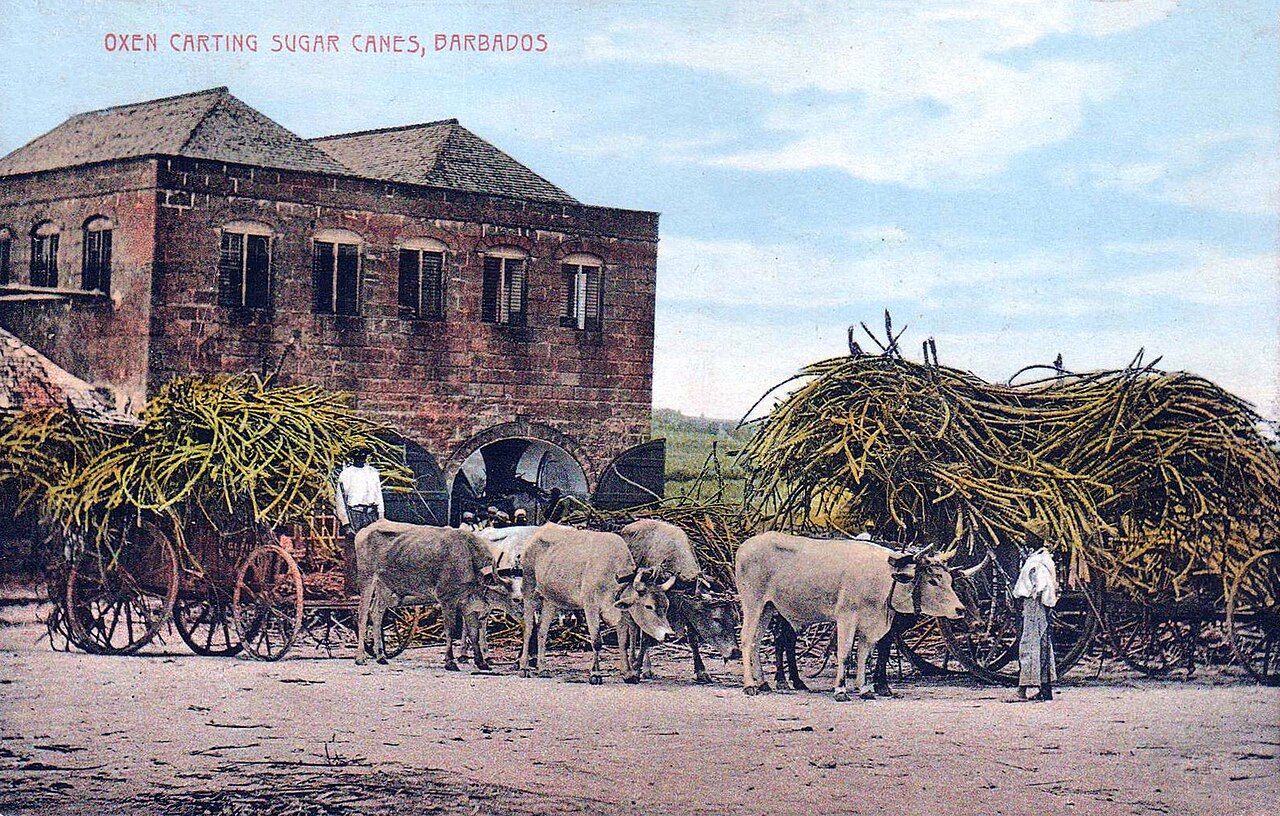
Rum’s Barbadian story begins with molasses and plantation slavery, then meets Bridgetown, a working sugar windmill and the harvest’s festival ending.
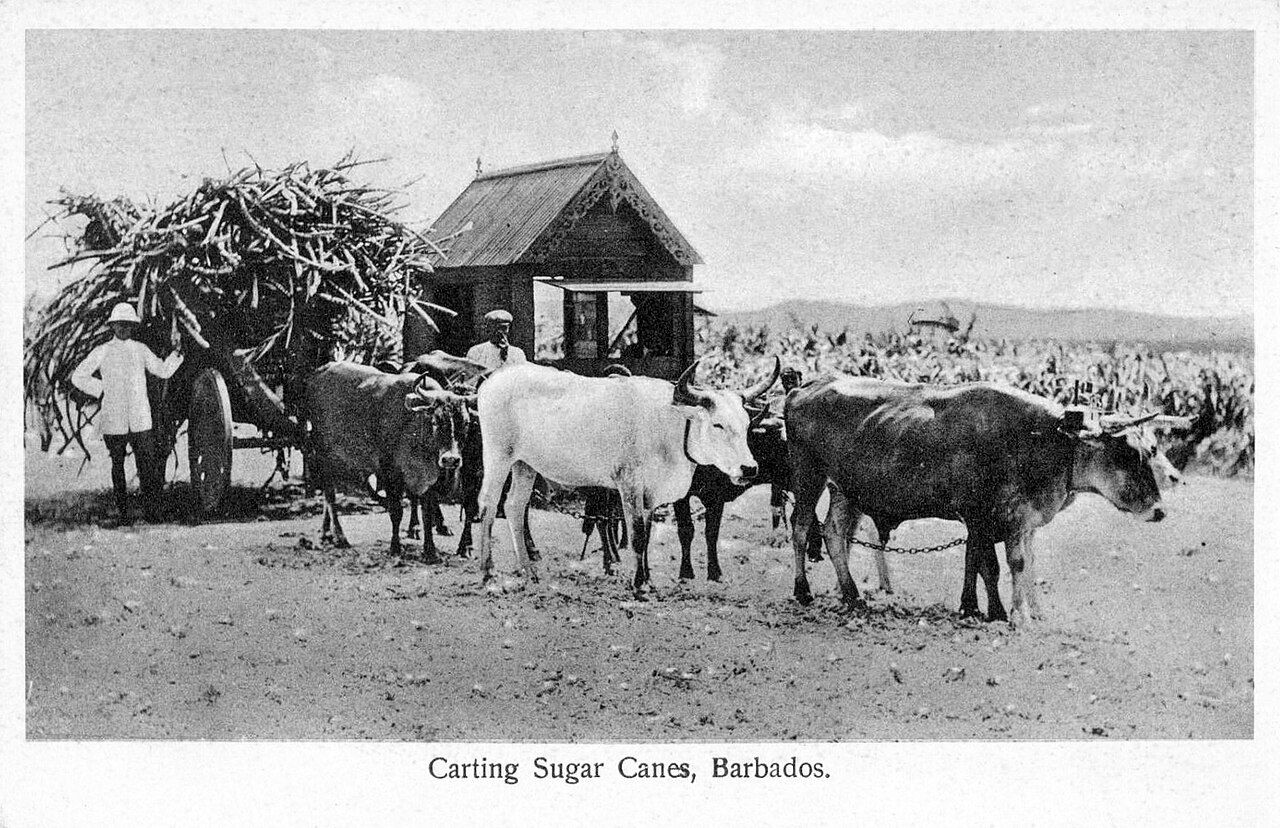
17th-century Barbados made rum from sugarcane molasses. The island is often described as rum’s birthplace. Its early rum carried the name kill-devil, a rough-edged beginning for a drink with a long history.
| Drink | Rum |
|---|---|
| Region | Barbados |
Sugar and rum
The story cannot begin with the drink alone. Sugar plantations across Barbados were worked by enslaved Africans. Slavery in the British colonies was abolished in 1834. Those facts belong beside every account of rum’s early making, not in a distant footnote. Molasses names a process, but the account also names the people forced to sustain it, and the crop whose harvest shaped the island's public calendar.
Molasses remains central to the wider tradition: most rum is distilled from it. Rhum agricole takes another route, made from fresh sugarcane juice. The distinction keeps the crop close to the glass, though neither method can stand apart from sugar’s history.
Rhum agricole from Martinique has held a French AOC since 1996. Barbados’s story sits among other drink histories, including the Hebridean island of peated malt, while keeping its own particular weight. Here, the first chapter is molasses, plantation labour and an island often named as rum’s beginning.
Small neighbourhood rum shops remain traditional meeting places across Barbados. That fact offers a quieter frame for rum than birthplace claims. A drink can travel widely in reputation, while its local presence gathers around ordinary places of meeting.
In 2011, UNESCO inscribed Historic Bridgetown and its Garrison on the World Heritage List. The name gives the capital and its garrison a place in the island’s recorded past. It also brings a larger history into view without making rum the whole story.
George Washington visited Barbados in 1751. It was the only journey he made outside North America. Set beside the island’s plantation history, that visit marks another passage through Barbados, but leaves its own questions about whose histories become familiar.
At Morgan Lewis Windmill, in the parish of St. Andrew, the past has a working form. It is the last working sugar windmill on Barbados. The fact is spare, almost enough on its own: sugar’s old landscape remains visible through one surviving working mill.
Crop Over marks the end of the sugarcane harvest. Its final day is Grand Kadooment Day, held on the first Monday of August. The festival brings the harvest into public memory, where celebration and the history behind sugar share the same ground.
That overlap is worth keeping in view. A festival’s ending can carry more than a calendar point; here, it marks a harvest with a long and difficult past. The name Crop Over makes the crop explicit, even as rum gives sugar another life.
Barbados is often called rum’s birthplace, but origins rarely tell the whole story. Molasses, enslaved labour, a capital and garrison, a windmill, and a harvest festival remain joined in this account. What should a harvest celebration hold beside that inheritance?
Images on this page: photographer unknown (public domain) original; W.L. Johnson & Co., Barbados (public domain) original; Anthony Levrot (Creative Commons BY-SA 4.0); MHM55 (Creative Commons BY-SA 4.0); Lorenz Poffet (Creative Commons BY-SA 4.0).