History & Customspoured: Bordeaux wineFrance (Gironde)
Bordeaux: The Port of the Moon and Its Wine Story
Bordeaux’s riverfront links its reflecting pool and wine museum, then traces how English trade and the 1855 Classification shaped the city’s name.
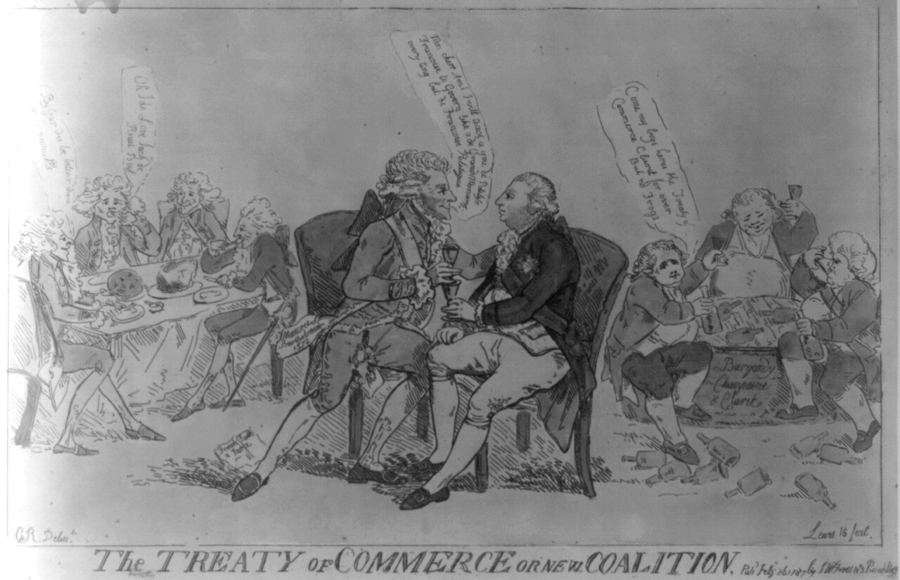
1152 brought Eleanor of Aquitaine and Henry Plantagenet together in marriage. Their union opened three centuries of wine trade between Bordeaux and England. The riverfront still gives that long exchange a place to begin.
| Place | Detail |
|---|---|
| Wine museum | On the Garonne, in Bacalan |
| Tram | Line B stops beside the museum |
| Miroir d'eau | Before the Place de la Bourse |
Begin at the river
Start with the Garonne, whose banks shape this city’s wine story. The riverfront holds history without keeping it still. Bordeaux, Port of the Moon, gained UNESCO recognition in 2007. That name gathers the built city and its river into one frame.
The water also leads beyond the city’s edge. Below Bordeaux, the Garonne and Dordogne join to form the Gironde estuary. The meeting gives the wine region a geography larger than any single quay. A slow look along the river makes that scale easier to feel.
The Miroir d'eau lies before the Place de la Bourse. It is a shallow reflecting pool, a spare surface facing the riverfront. The reflection offers a pause between the city’s stone and its water. It is an appealing place to let the story settle.
Trade
From the river, move back through the marriage that changed Bordeaux’s fortunes. Eleanor of Aquitaine married Henry Plantagenet in 1152. The union opened three centuries of wine trade between Bordeaux and England. That span is a reminder that the city’s wine identity grew through exchange.
The English gave Bordeaux’s light red wines a name: claret. The word carries a history of crossing water and language. It makes the trade feel close, rather than like a line in a ledger. Bordeaux’s river position is part of that story, not merely its setting.
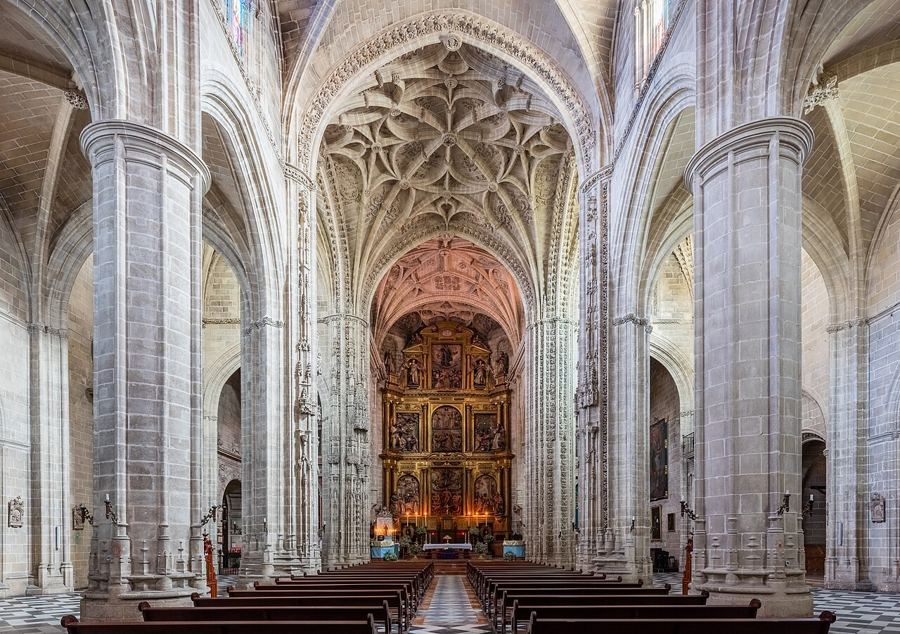
The route also has room for another wine landscape. the Spanish wine town reached by rail offers a different point of comparison. Here, the Garonne and the trade with England remain central. The contrast is useful without making the places interchangeable.
Read the classification
Next, consider the 1855 Classification and what it set out to rank. It covered wines of the Médoc and Sauternes for the Exposition Universelle in Paris. The classification belongs to Bordeaux’s history, but it is not the whole region. Its boundaries matter as much as its reputation.
Across the Gironde, the leading grapes differ by bank. Cabernet Sauvignon leads on the Left Bank of the estuary. Merlot leads on the Right Bank. Those distinctions give the map a voice, though they cannot tell every wine’s story alone.
The classification and the trade describe different kinds of influence. One arranged wines for an exhibition in Paris. The other connected Bordeaux and England across three centuries. Together, they show how the city’s name travelled through both formal ranking and everyday commerce.
Take the museum turn
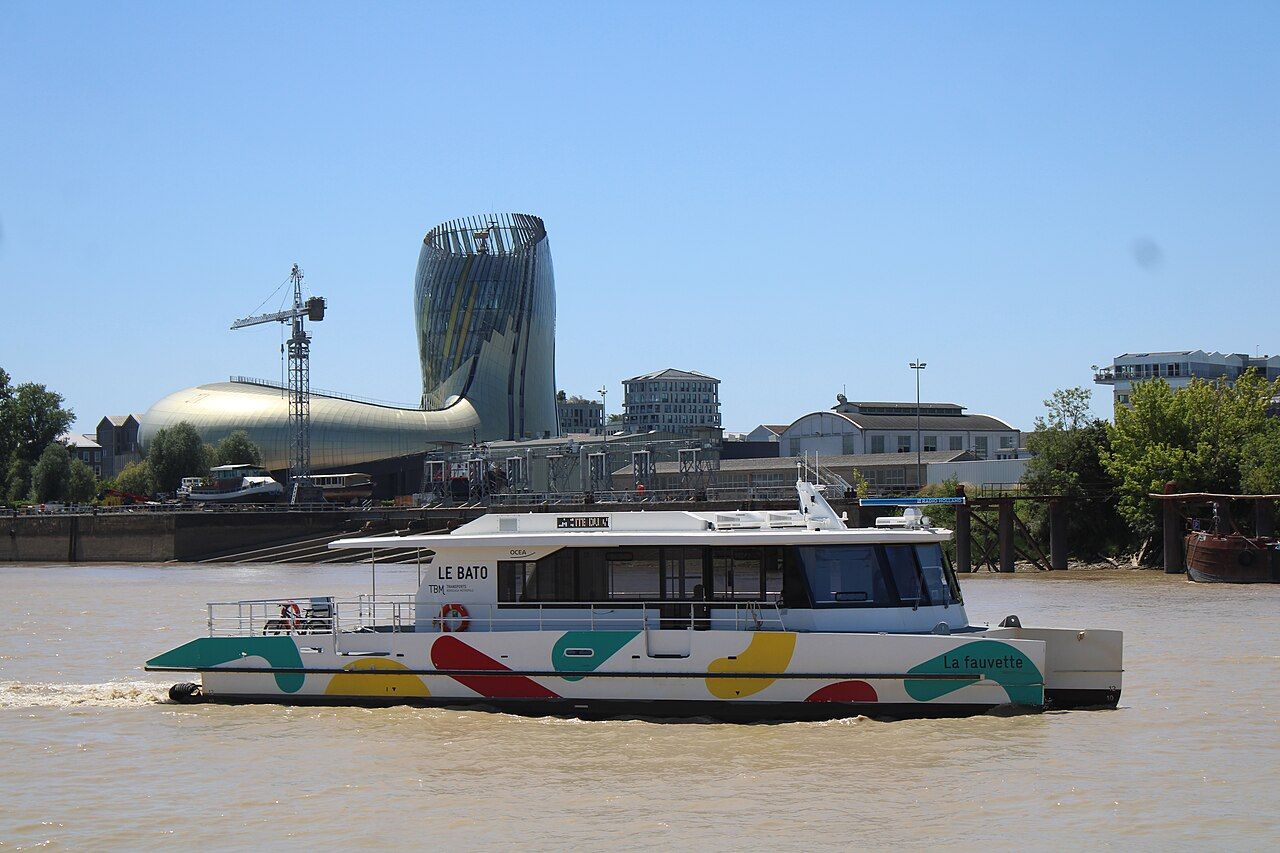
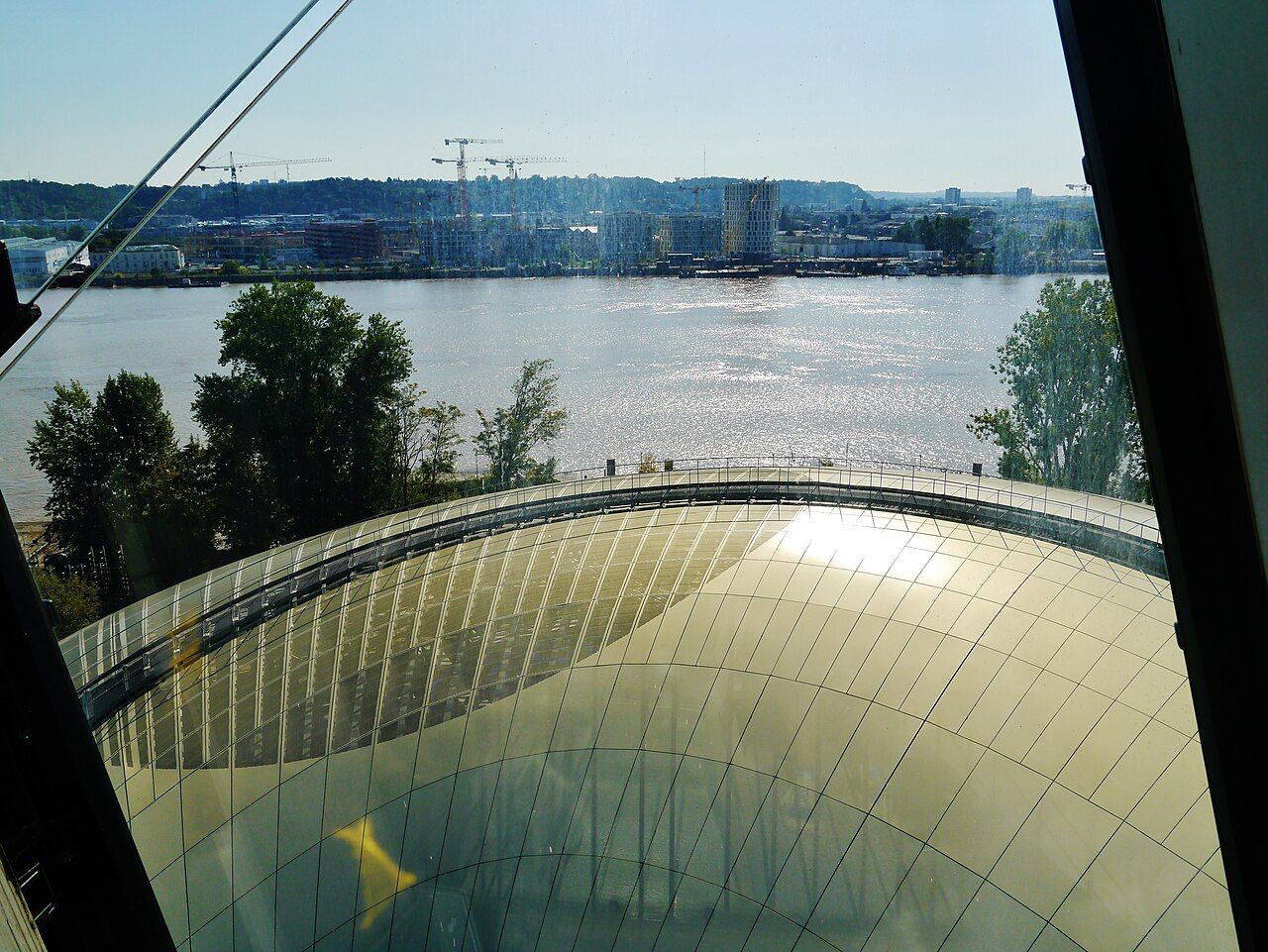
Then turn towards La Cité du Vin, the museum of wine cultures. It opened in 2016 on the Garonne’s banks, in Bordeaux’s Bacalan district. Tram line B stops beside the museum on the riverfront. The practical route and the historical route meet here neatly.
The building’s curving shape was designed by Anouk Legendre and Nicolas Desmazières. Its form suggests wine swirling in a glass. That image makes a fitting counterpoint to the straight lines of classifications and maps. The building gives wine a shape that keeps moving.
The museum’s place beside the Garonne matters to the walk. The river carried the city’s trade, while the museum presents wine cultures. Those threads meet without needing to be folded into a single explanation. A riverbank can hold both memory and present-day attention.
The river carried the city’s trade, while the museum presents wine cultures.
Look beyond the quay
Finish by widening the view from Bordeaux to the vineyard landscapes. The Jurisdiction of Saint-Émilion was inscribed in 1999. It was the first vineyard landscape to receive UNESCO World Heritage recognition. That recognition extends the story beyond the city and its riverfront.
Saint-Émilion and the Gironde banks offer distinct ways to read Bordeaux wine. The classification names particular areas and wines. The landscape inscription honours a vineyard setting. Neither replaces the river, whose course joins the Garonne and Dordogne below Bordeaux.
Return, in thought, to the reflecting pool and the water beside it. The English claret trade, the 1855 Classification and the museum occupy different moments. Yet each gives the city another way to be understood. Bordeaux’s river keeps those histories in view, without bringing them to a final stop.
Images on this page: Anthony Levrot (Creative Commons BY-SA 4.0); Zairon (Creative Commons BY-SA 4.0); Diego Delso (Creative Commons BY-SA 4.0); photographer unknown (public domain) original; British Cartoon Prints Collection (public domain) original.